Top 10 Driverless Forklifts in China for Global Buyers?

Time:2026-05-11 Author:Sophia
0%

As industries evolve, the demand for automation rises. Driverless forklifts have emerged as pivotal tools in many warehouses and manufacturing environments. These machines enhance efficiency and safety while reducing labor costs. In China, a significant market for automated solutions, various companies manufacture advanced driverless forklifts that cater to global buyers.

Chinese manufacturers focus on innovation and technology, offering diverse models. Each model has unique features, from navigation systems to load capacities. However, not all options are ideal for every operation. Buyers must carefully assess their specific needs, as selecting the wrong driverless forklift can lead to inefficiencies. Understanding the nuances of each model can mitigate risks associated with automation.

Investing in a driverless forklift is a promising venture, but buyers should acknowledge potential challenges. Adaptation to this technology requires training and a shift in workplace dynamics. Exploring different options is vital for making informed choices. This article provides insights into the top 10 driverless forklifts available in China, aiming to guide global buyers towards suitable investments in automation.
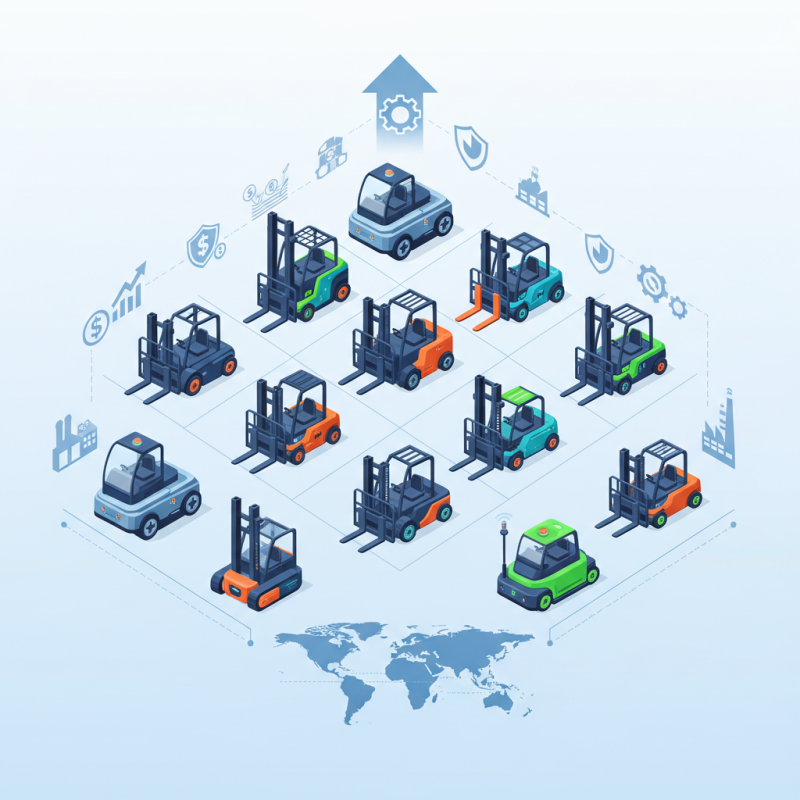
Top 10 Driverless Forklifts in China for Global Buyers?

Overview of Driverless Forklifts: Definition and Importance

Driverless forklifts represent a significant advancement in warehouse automation. These intelligent machines operate without a human driver, which boosts efficiency and safety. They can navigate complex environments filled with obstacles and perform tasks traditionally handled by human operators.

The importance of driverless forklifts lies in their ability to reduce labor costs and enhance precision. They work continuously, minimizing downtime. However, implementing such technology may pose challenges. Companies must ensure proper integration with existing systems. Training employees to work alongside these machines is also crucial. The potential for accidents still exists, especially during the transition phase. Constant assessment and improvement of safety protocols are necessary.

Investing in driverless forklifts can yield substantial returns. Yet, it is vital to evaluate the specific needs of a facility. Tailoring the technology to suit particular workflows enhances overall productivity. Shortcomings may arise if companies become overly reliant on automation. Balancing human roles with robotic efficiency remains critical in achieving the best outcomes.

Key Features to Consider When Choosing Driverless Forklifts

When choosing driverless forklifts, several key features stand out. A critical factor is automation capabilities. Efficient navigation systems utilize LiDAR and cameras for obstacle detection. This technology minimizes accidents and improves productivity. Additionally, the responsiveness of the forklift in various environments plays a significant role. It should adapt quickly to changing warehouse layouts and diverse tasks.

Battery life is another essential feature. Long-lasting batteries allow for extended operations. Forklifts with quick-charging capabilities reduce downtime significantly. Buyers should also consider the ease of programming and integration with existing systems. User-friendly interfaces simplify operations for staff, enhancing overall workflow.

Tips for selection: Check the load capacity and stability of the forklift. Ensure it meets specific operational needs. Also, remember to assess safety features. With advanced sensors and emergency stop functions, safety must always be a priority. Balancing advanced technology with user requirements can guide your decision better.

Top 10 Driverless Forklift Manufacturers in China

The demand for driverless forklifts is rising in China. This shift is driven by the need for efficiency in warehouses and manufacturing facilities. Many manufacturers have emerged, showcasing innovations in automation and robotics.

China's landscape of driverless forklift manufacturers is diverse. Some companies focus on sophisticated navigation systems. They integrate advanced sensors and AI technologies. Others excel in production efficiency and scaling up operations. These manufacturers offer solutions tailored to different industries, from e-commerce to automotive.

However, industry challenges exist. The technology is still evolving, leading to occasional technical hiccups. Safety regulations also pose hurdles. Buyers must evaluate the reliability and adaptability of these forklifts. Continuous learning and feedback are vital for improvement. The journey toward seamless automation remains intriguing and complex.

Comparative Analysis of Technology and Innovation in Driverless Forklifts

The landscape of driverless forklifts in China is evolving rapidly. Industry reports indicate a projected annual growth rate of 16% in the autonomous forklift market from 2022 to 2026. This growth reflects the increasing demand for automation in warehouses and logistics sectors. However, assessing the technology behind these vehicles reveals a range of innovations.

Many player companies are adopting various technologies to maximize efficiency. Some utilize advanced sensors for improved navigation, while others focus on artificial intelligence for better decision-making. A report by the International Federation of Robotics indicates that about 30% of companies are still not leveraging robotics due to concerns over reliability and cost. This lack of confidence shows a need for improvement in demonstrating the return on investment for automated systems.

Moreover, safety remains a critical area for reflection. Data from industry standards show that 15% of reported accidents involve automated equipment, highlighting concerns over safety protocols. Despite the innovations, there is a pressing need for better training programs for operators. Ensuring a smooth transition to automated systems requires addressing these gaps. The future of driverless forklifts in China hinges not just on technological advancements but also on building trust and reliability within the workforce.

Market Trends and Future Outlook for Driverless Forklifts in China

The market for driverless forklifts in China is evolving rapidly. Recent reports indicate that the sector is projected to grow at a compound annual growth rate (CAGR) of over 25% from 2023 to 2030. This growth is driven by increasing demand for automation in logistics and warehousing. Investments in smart supply chain solutions play a crucial role in enhancing operational efficiency.

Moreover, companies are focusing on integrating advanced technologies. LiDAR, computer vision, and AI are pivotal in improving safety and efficiency. A prominent study highlighted that 70% of logistics companies in China report significant improvements in productivity after adopting driverless technology. However, there are challenges in terms of initial costs and ongoing maintenance. Many small to medium-sized enterprises hesitate to invest fully.

User acceptance also poses a question. As automation becomes more prevalent, some employers worry about potential job losses. Drivers and operators fear that their roles may diminish. Balancing automation and human resources continues to be a complex issue. Addressing these concerns will be vital for successful integration and adoption.

FAQS

: What is driving the demand for driverless forklifts in China?

: The need for efficiency in warehouses and manufacturing is driving demand.

What technologies are used in driverless forklifts?

Advanced sensors, AI, LiDAR, and computer vision are commonly integrated.

How fast is the driverless forklift market growing?

The market is expected to grow over 25% annually from 2023 to 2030.

What industries are adopting driverless forklift technology?

Industries like e-commerce and automotive are adopting this technology.

What challenges do buyers face when considering driverless forklifts?

Reliability, adaptability, and evolving technology are key concerns for buyers.

How do employees feel about automation in the workplace?

Many worry about job losses and the potential diminishment of their roles.

What has been the impact of driverless technology on productivity?

About 70% of logistics companies report significant productivity improvements.

What are the initial costs associated with driverless forklifts?

Initial costs can be high, which causes hesitation among smaller enterprises.

Why is continuous learning important for driverless forklift technology?

It helps address technical hiccups and improves overall safety and efficiency.

How can the balance between automation and human resources be achieved?

Addressing employee concerns and ensuring training is essential for integration.

Conclusion

Driverless forklifts represent a significant advancement in warehouse automation, combining cutting-edge technology with enhanced operational efficiency. These autonomous vehicles eliminate the need for manual handling, thereby reducing labor costs and minimizing the risk of workplace accidents. When selecting a driverless forklift, buyers should consider key features such as safety systems, navigation capabilities, load capacity, and ease of integration into existing operations.

In China, the driverless forklift market is rapidly evolving, with numerous manufacturers pushing the boundaries of innovation. A comparative analysis reveals a diverse range of technologies, each aimed at improving reliability and performance. Current market trends indicate a growing demand for intelligent automation solutions in logistics, positioning driverless forklifts as a crucial element of the future supply chain landscape. As the industry continues to develop, the outlook for driverless forklifts in China promises exciting advancements and increased global interest.


Sophia

Sophia

Sophia is a dedicated marketing professional with an exceptional depth of knowledge about her company's products and services. With a keen understanding of market trends and customer needs, she crafts insightful blog posts that not only inform but also engage readers, enriching the company’s online......