China has become a major source of automated guided vehicles for warehouses, factories, hospitals, and distribution centers. For global buyers, selecting a reliable AGV robot manufacturer requires more than comparing online prices. Product quality, navigation accuracy, software integration, safety design, and after-sales support all affect long-term performance.
This guide examines leading Chinese manufacturers through practical purchasing criteria. It considers payload capacity, operating time, charging methods, navigation systems, and customization options. It also reviews certifications, export experience, installation services, and maintenance support. A pallet-moving vehicle may look impressive in a demonstration, yet struggle on uneven floors or during peak warehouse traffic. The details matter.
Reliable evaluation should include factory audits, technical documentation, sample testing, and clear acceptance standards. Buyers should request evidence from completed projects, not only attractive brochures. Some suppliers have strong hardware but limited international service coverage. Others offer flexible engineering but need better documentation. Not always.
No ranking is perfect. Manufacturer suitability depends on facility size, workflow complexity, budget, and local compliance requirements. A careful buyer should compare total ownership costs, including spare parts, software updates, training, and downtime risks. This article introduces China’s top AGV robot manufacturers and explains where each supplier may fit best. Its purpose is practical guidance, not an unquestioned verdict. A pilot project remains wise before large-scale deployment.
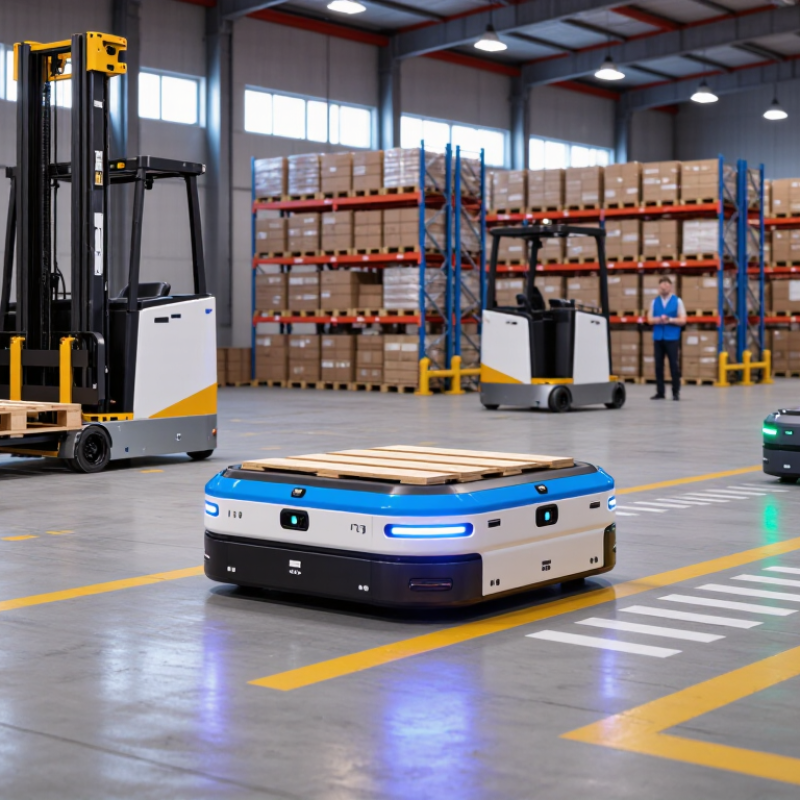
AGV Robots in China: Industry Overview and Core Technologies
China Top AGV Robot Manufacturers for Global Buyers
AGV Robots in China: Industry Overview and Core Technologies
China’s AGV industry serves warehouses, factories, hospitals, and distribution centers worldwide. Local manufacturers compete through customization, production scale, and responsive engineering support. Buyers should assess real deployment records, not only catalog specifications. A fast robot is not always the best choice.
Common AGV designs include magnetic guidance, QR-code navigation, laser SLAM, and visual positioning. Modern systems combine lidar, cameras, ultrasonic sensors, and safety scanners. These tools help robots detect pallets, workers, walls, and unexpected obstacles.
Fleet management software assigns tasks, balances traffic, and reports battery conditions. Some platforms connect with warehouse management and manufacturing execution systems through standard interfaces.
In a practical warehouse test, an AGV may collect a pallet, pause at a crossing, and deliver it beside a loading bay. Small details matter. Floor quality, aisle width, pallet variation, and charging locations can affect performance sharply. Lithium battery systems support longer shifts, while automatic charging reduces manual intervention. Yet software integration often takes longer than expected. A polished demonstration can hide difficult edge cases. Buyers should request site trials, maintenance data, cybersecurity documentation, and spare-parts plans. I have found that clear acceptance criteria prevent many disputes, although they cannot remove every operational surprise.
Key Types of Chinese AGV Robots and Their Industrial Applications
Chinese AGV robot manufacturers now produce several vehicle types for factories, warehouses, and distribution centers. Towing AGVs pull carts between assembly lines, while pallet AGVs move loaded pallets through storage areas. Forklift AGVs handle lifting tasks, often placing pallets into racks with controlled accuracy. Some newer models use autonomous navigation, combining cameras, laser sensors, and magnetic or visual guidance.
Each type serves a different industrial problem. In automotive plants, towing units can deliver parts to fixed workstations every few minutes. In food and beverage warehouses, pallet AGVs reduce manual travel across chilled floors. Forklift AGVs suit repetitive loading zones, but they require clear rack positions and carefully managed pedestrian routes. Small unit-load AGVs can carry cartons, bins, or electronic components between picking stations. The best choice depends on load weight, aisle width, floor condition, traffic, and required cycle time.
Practical deployment needs more than a vehicle purchase. Engineers should test stopping distance, battery charging, sensor performance, and emergency access during a pilot project. A polished layout can still fail during peak shifts. Dust, reflective surfaces, or changing inventory may confuse navigation systems. This is where operating data matters. Buyers should request documented safety functions, maintenance procedures, training support, and realistic performance records. A slower AGV may sometimes be the safer and more reliable investment.
Leading China AGV Robot Manufacturers for International Buyers
China AGV robot manufacturers are gaining attention from international buyers because China has built a large automation supply chain. The International Federation of Robotics reported 276,288 industrial robot installations in China during 2023, representing about 51% of global installations. This figure does not measure AGVs directly, but it shows strong manufacturing experience, component access, and engineering capacity.
For international buyers, supplier evaluation should go beyond price and battery capacity. Check navigation accuracy, payload performance, charging time, and recovery after an emergency stop. A warehouse test should include narrow aisles, reflective floors, uneven transitions, and mixed pedestrian traffic. Suppliers should also provide risk assessments and documentation aligned with ISO 3691-4. Interact Analysis has forecast continued double-digit growth in the mobile robot market through the next several years, increasing the need for reliable integration and after-sales support.
The best China AGV robot manufacturers usually provide simulation files, communication protocols, spare-parts plans, and remote diagnostic procedures. Ask for measured cycle times, not attractive estimates. Ask for customer references in similar industries. A low quotation may hide expensive software work later. That remains a common weakness. International buyers should also confirm local service capability, language support, cybersecurity controls, and electrical compatibility before signing. Performance can look excellent in a factory demonstration, yet fail beside a busy loading dock.
China AGV Robot Manufacturers: Representative Payload Benchmarks
Typical payload capacities used by international buyers when comparing AGV product categories from China.
Payload capacity varies by vehicle configuration, load center, floor conditions, navigation system, and safety requirements.
These representative industry benchmarks are intended for initial supplier evaluation and should be verified against the manufacturer's technical datasheet and test results.
How to Evaluate Chinese AGV Suppliers and Product Quality
Evaluating Chinese AGV suppliers requires more than comparing online prices. A reliable supplier should explain navigation accuracy, payload limits, battery cycles, charging time, and safety controls clearly. Ask for test videos and complete technical documents. Better still, request a live factory demonstration. Watch the AGV follow routes, stop near obstacles, and recover after a communication interruption.
Product quality appears in small details. Inspect welds, cable protection, wheel materials, sensor mounting, and software alerts. Request sample inspection records, factory quality procedures, and traceable component information. Check whether the supplier can provide installation training, spare parts, remote support, and clear warranty terms. Independent testing may also confirm performance and electrical safety requirements for your market.
Tips: Define your warehouse conditions before requesting quotations. Share floor slope, aisle width, load shape, temperature, and daily operating hours. Test one unit under realistic conditions before placing a large order. I once focused too heavily on navigation precision and overlooked maintenance access. That mistake increased service time. A perfect demonstration proves little if operators cannot adjust settings safely. Ask difficult questions. Listen for specific answers, not confident promises. Supplier audits, reference projects, and staged payments can reduce risk, but they cannot replace hands-on validation.
Export, Certification, and After-Sales Support for Global Customers
China Top AGV Robot Manufacturers for Global Buyers?
Export readiness matters as much as navigation accuracy. Experienced AGV manufacturers should provide commercial invoices, packing lists, manuals, and verified shipping documents. They should also explain battery transport requirements and suitable Incoterms clearly. Ask for factory acceptance testing before shipment. A recorded route test can reveal turning errors, sensor gaps, or unstable loading. Certification requires careful review. CE marking may support European sales, while other markets may require additional electrical, radio, or machine safety approvals. ISO 9001 shows process control, but it does not guarantee every robot’s performance. That distinction is easy to miss.
Tips:
Request certificate numbers, test reports, and their issuing laboratories. Confirm whether documents cover the exact model and configuration. Keep spare sensors, wheels, and charging parts near the installation site. Agree on response times, remote diagnostics, training, and on-site service before payment. A useful support plan includes software updates, fault records, and clear escalation contacts. Test the support team with practical questions. Their answer speed matters.
After-sales reliability becomes visible during the second month, not the sales meeting. Global buyers should request FAT and SAT procedures, warranty boundaries, and maintenance schedules. Ask how quickly engineers can respond across time zones. Some suppliers promise fast support but depend heavily on one technician. That is a weakness worth discussing.
Build a pilot project with measurable targets, such as delivery accuracy, uptime, and recovery time. Real factories are messy, and no proposal predicts every obstacle. Awareness of that uncertainty usually creates a stronger partnership.
FAQS
Review real deployment records, factory demonstrations, maintenance data, and reference projects. A fast robot may not suit your warehouse. Ask for precise answers.
Common options include magnetic guidance, QR-code navigation, laser SLAM, and visual positioning. Modern systems may combine lidar, cameras, ultrasonic sensors, and safety scanners. Each method has limits.
Test one unit with actual pallets, floor conditions, aisle widths, and daily operating hours. Watch it cross intersections, avoid obstacles, and recover after communication loss. Demonstrations can hide edge cases.
Floor slopes, uneven surfaces, narrow aisles, pallet variations, and charging locations matter greatly. A pallet with damaged boards may behave differently. Small details matter.
Request navigation data, payload limits, battery-cycle information, charging times, safety controls, and interface specifications. Also request inspection records and traceable component details. Missing documents deserve attention.
Check whether fleet software assigns tasks, balances traffic, monitors batteries, and connects with warehouse systems. Test alerts and recovery procedures. Integration often takes longer than expected.
Request commercial invoices, packing lists, manuals, shipping documents, test reports, and relevant safety approvals. Confirm each document covers the exact model and configuration. A certificate alone proves little.
Define warranty limits, response times, spare parts, training, remote diagnostics, software updates, and escalation contacts. Keep spare wheels, sensors, and charging parts nearby. Support quality appears later.
Set measurable targets for delivery accuracy, uptime, recovery time, charging performance, and obstacle handling. Use both factory and site acceptance tests. No proposal predicts everything.
Conclusion
China has become a major source of AGV robot solutions, supported by strong manufacturing capabilities, software development, sensor integration, and automation expertise. Chinese AGV robots include towing vehicles, pallet movers, lifting models, sorting units, and flexible mobile platforms, serving warehouses, factories, hospitals, retail facilities, and other industrial environments. Their applications commonly involve material handling, storage, production-line delivery, order fulfillment, and internal transportation.
For international buyers, selecting a reliable Chinese supplier requires careful evaluation of navigation accuracy, load capacity, battery performance, safety systems, software compatibility, production quality, testing procedures, and customization abilities. Buyers should also review export experience, applicable certifications, technical documentation, installation support, spare-parts availability, training, and after-sales service. A transparent supplier with stable quality control and responsive communication can help reduce operational risks and support smooth deployment in different countries. Comparing several suppliers through samples, factory assessments, and clearly defined contracts is an effective way to identify a suitable AGV robot partner.

 SCP Technology