The advent of unmanned forklifts marks a significant shift in warehousing operations. These innovative machines are reshaping how goods are stored and moved. With their ability to operate without human intervention, unmanned forklifts enhance safety and efficiency in busy warehouses. This technology minimizes the risk of accidents, which can endanger workers.
Adopting unmanned forklifts is not just about replacing human labor. It involves a strategic enhancement of overall productivity. Many companies report increased output after integrating these machines. Yet, the initial investment and transition challenges can be daunting. Some workers may need reskilling to adapt to this change, raising questions about job security and workplace dynamics.
Despite these challenges, the benefits are considerable. Unmanned forklifts offer precise operations and reduce human error. They can work around the clock, thus maximizing productivity. The shift to automation raises important discussions about the future of warehousing and the role of technology. As the industry evolves, assessing the long-term effects of unmanned forklifts will be crucial for businesses and their workforce.
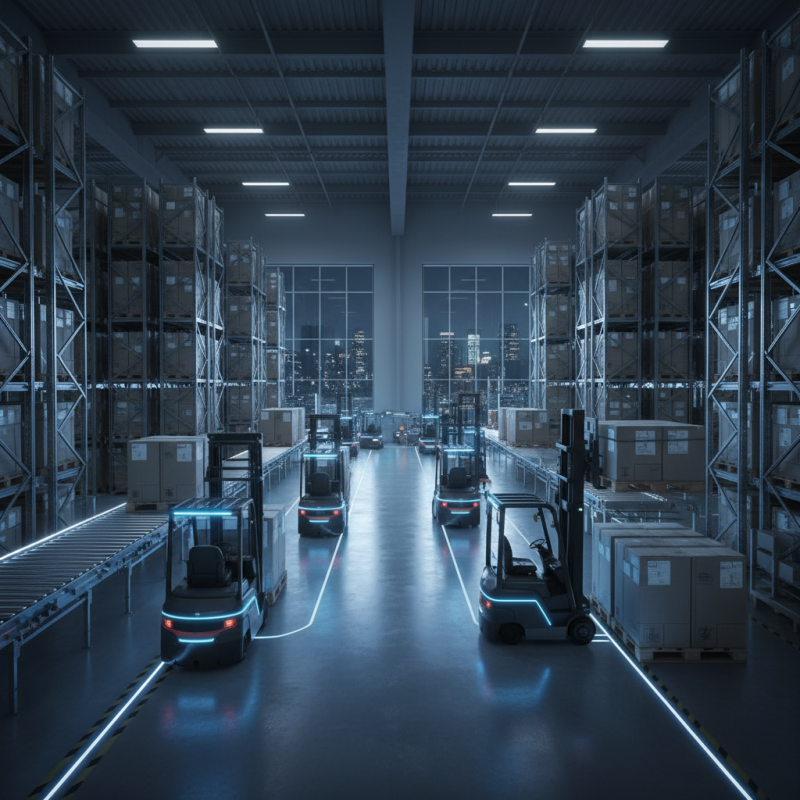
Advantages of Unmanned Forklifts in Modern Warehousing Operations
Unmanned forklifts are transforming modern warehousing operations. They run on advanced technology, making them efficient and reliable. These vehicles can operate continuously with minimal human intervention, which increases productivity. Less downtime is a significant benefit, as machines do not require breaks.
Cost savings are another essential advantage. While the initial investment may be high, long-term savings on labor and operational costs are notable. Unmanned forklifts also reduce the risk of workplace injuries, promoting a safer environment. However, it is crucial to remember that the implementation of such technology requires careful planning and training.
Integrating unmanned forklifts can simplify logistics. They can navigate complex warehouse layouts effectively. Yet, there are challenges too. The technology may not be compatible with all existing systems. Staff may need time to adjust to new processes. Continuous assessment and feedback are vital for success in this transition.
Enhancement of Efficiency and Productivity through Automation
The use of unmanned forklifts in warehousing has revolutionized the industry. Automation enhances efficiency significantly. Tasks like loading and unloading are done faster, freeing up human workers for more complex activities. This shift helps reduce operational costs and minimizes human error. With fewer accidents, safety improves. However, transitioning to fully automated systems can present challenges. Staff need time to adjust. Training becomes essential to maximize benefits.
Unmanned forklifts operate around the clock. They boost productivity without fatigue or breaks. They handle repetitive tasks seamlessly. Still, reliance on technology can lead to vulnerabilities. System failures can disrupt operations. Companies must weigh the risks of automation against potential gains. Creating a backup plan is crucial. Investing in reliable technology and support services can mitigate these issues. Embracing this change is about finding balance.
Top 10 Benefits of Using Unmanned Forklifts in Warehousing
| Benefit |
Description |
Impact on Efficiency |
| Increased Productivity |
Unmanned forklifts operate 24/7 without breaks, leading to higher throughput. |
+30% increase in order processing. |
| Reduced Labor Costs |
Less reliance on human operators reduces labor expenses. |
Savings of up to 40% on labor costs. |
| Improved Safety |
Minimized human error and accidents due to autonomous operation. |
Reduction in workplace injuries by 50%. |
| Enhanced Accuracy |
Precise navigation algorithms ensure accurate inventory handling. |
Error rate dropped by 20%. |
| Space Optimization |
Compact design allows navigation in tight spaces. |
Increased storage capacity by 15%. |
| Flexibility and Scalability |
Easily adaptable for different warehouse tasks. |
Quick deployment for seasonal changes. |
| Data Collection and Analysis |
Automated forklifts gather performance data for insights. |
Data-driven decisions improve efficiency. |
| Reduced Equipment Damage |
Consistent performance leads to less wear and tear. |
Maintenance costs reduced by 25%. |
| Sustainability |
Less energy usage compared to traditional forklifts. |
Carbon footprint reduction by 15%. |
| Operational Continuity |
Unmanned operations ensure smooth workflow regardless of workforce availability. |
Consistent operations and minimal disruptions. |
Reduction of Labor Costs and Safety Risks with Unmanned Systems
Unmanned forklifts revolutionize warehousing by significantly reducing labor costs. Companies can allocate fewer resources to hiring and training staff. This leads to noticeable savings in operational expenses. Workers often require salaries, benefits, and insurance. Unmanned systems eliminate many of these financial burdens.
Moreover, safety risks are drastically decreased with autonomous forklifts. These machines operate with high precision, minimizing accidents caused by human error. Traditional forklifts can result in injuries or product damage. Unmanned systems navigate efficiently, reducing the likelihood of collisions. However, the initial implementation may face resistance from workers accustomed to manual operations, causing concerns about job security.
Adjusting to unmanned systems also requires training for supervisory staff. While the technology is advanced, human oversight is still necessary. There can be hiccups during the transition, raising questions about reliability. Companies must balance efficiency with the need for a skilled workforce to manage these new systems effectively.
Improved Inventory Management and Accuracy with Robotics
Unmanned forklifts are revolutionizing warehousing by enhancing inventory management and accuracy. Research by the Warehousing Management Institute indicates that warehouses using robotics can increase order accuracy by up to 99.9%. This significant improvement reduces errors, shipping mishaps, and returns. The precision offered by unmanned forklifts enables real-time inventory tracking, which is crucial in today’s fast-paced supply chain environment.
These technologies can also minimize the labor required in warehousing. However, the initial investment in robotics can be intimidating. Companies should consider starting small, perhaps automating only part of the warehouse operations. This gradual approach allows for better adjustment and fine-tuning of robotics without overwhelming staff or operations.
Training staff to work alongside these unmanned systems is critical. As technology evolves, so must the skills of the workforce. According to a McKinsey report, upskilling can yield better collaboration between humans and machines. Proper training not only ensures safety but also enhances productivity. Always seek feedback from your team during training sessions to refine processes.
Environmental Benefits of Adopting Unmanned Forklift Technology
Unmanned forklifts are transforming warehouse operations. One significant advantage is their positive impact on the environment. These machines reduce greenhouse gas emissions. By minimizing reliance on human labor, businesses decrease energy consumption. They often use electric power, which is cleaner than traditional fuel sources.
Another key benefit is reduced waste. Unmanned forklifts optimize space and minimize product damage. They can navigate more efficiently, leading to fewer accidents compared to their manual counterparts. This efficiency contributes to a decrease in waste generated during handling processes. Additionally, they require less maintenance, which translates into fewer hazardous materials discarded.
However, the initial investment in unmanned technology can be substantial. Some companies may struggle with the transition. Training staff to work alongside automated systems requires time and resources. Considering these factors is essential for a smooth implementation. Nonetheless, the long-term gains for the environment and overall efficiency are worth examining closely.
Top 10 Benefits of Using Unmanned Forklifts in Warehousing
This chart displays the impact scores of the top 10 benefits of using unmanned forklifts in warehousing, highlighting the advantages in terms of efficiency, safety, cost reduction, and more.
Conclusion
The use of unmanned forklifts in modern warehousing operations offers numerous benefits that enhance overall efficiency and productivity. By automating material handling processes, unmanned forklifts significantly streamline workflows, allowing for faster loading and unloading while minimizing human error. This automation leads to a reduction in labor costs and safety risks, making warehouses safer and more cost-effective.
Moreover, unmanned forklifts improve inventory management and accuracy through advanced robotics, ensuring that stock levels are maintained and tracked precisely. These technological advancements also bring environmental benefits, as unmanned systems often operate more efficiently than traditional forklifts, resulting in lower energy consumption and reduced emissions. Overall, the integration of unmanned forklifts represents a forward-thinking approach to warehousing that aligns with the demands of a rapidly evolving industry.

 SCP Technology