Top 10 AGV Autonomous Guided Vehicles for Global Sourcing

Time:2026-10-08 Author:Isabella
0%

Global warehouses are moving beyond manual transport, especially where labor costs, safety demands, and order volumes continue to rise. Agv Autonomous Guided Vehicles now support pallet movement, line feeding, picking assistance, and repeatable internal logistics. Their value is visible in practical details: accurate lane guidance, controlled turning, safe stopping, and reliable battery charging during busy shifts. However, performance depends on warehouse layout, floor quality, traffic rules, payload needs, and software integration.

This introduction presents ten notable AGV solutions for global sourcing and supplier comparison. The selection considers navigation methods, payload capacity, operating speed, safety sensors, fleet management, maintenance access, and compatibility with warehouse systems. It also examines manufacturer experience, documented deployment capabilities, service coverage, and the transparency of technical specifications. A strong vehicle should not only move efficiently. It should remain predictable when aisles become crowded.

No ranking is perfect.

A low purchase price may conceal integration costs, spare-part delays, or difficult training requirements. Conversely, a premium model may offer features that smaller facilities never use. Buyers should test turning behavior, charging routines, emergency stops, and communication stability before committing to large-scale deployment. Regional voltage standards, language support, local technicians, and delivery schedules also deserve careful attention. These factors can change the practical value of an otherwise impressive machine.

The following overview aims to provide a balanced starting point. It does not replace site trials or professional engineering assessment. Still, it can help sourcing teams compare credible options with clearer expectations, fewer assumptions, and a stronger focus on long-term operational reliability.
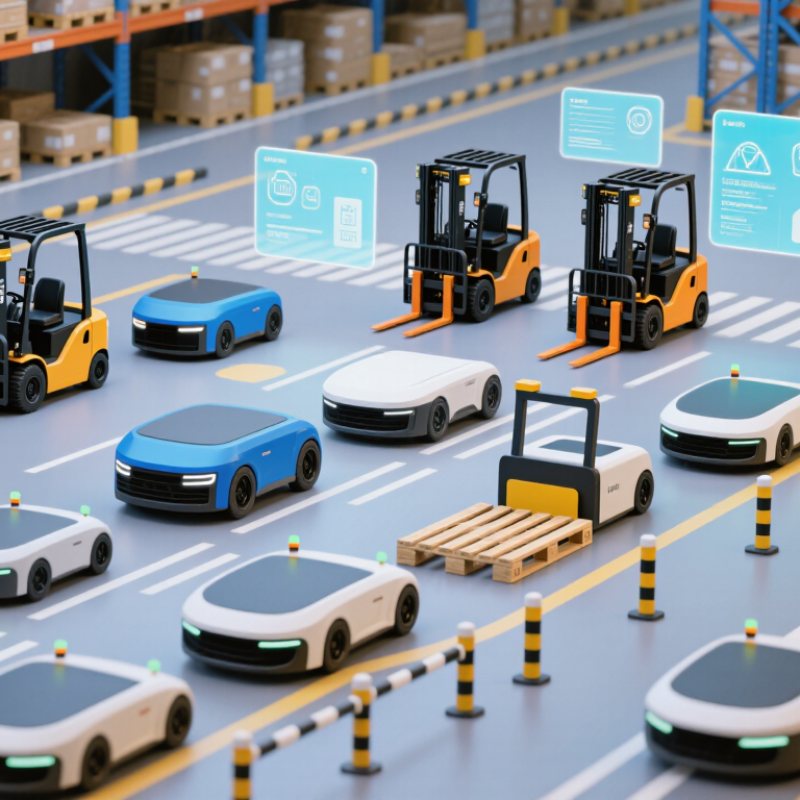
Top 10 AGV Autonomous Guided Vehicles for Global Sourcing

What AGVs Are and Why They Matter in Global Sourcing

Top 10 AGV Autonomous Guided Vehicles for Global Sourcing

What AGVs Are and Why They Matter in Global Sourcing

Automated guided vehicles, or AGVs, move materials through warehouses and factories without onboard drivers. They usually follow magnetic strips, laser markers, QR codes, or mapped routes. Unlike trucks, AGVs deliver steady movement between receiving docks, storage aisles, and production lines. That matters when sourcing spans several countries. A delayed pallet can interrupt customs appointments, factory schedules, and retailer deliveries. The International Federation of Robotics reported about 113,000 professional service robots for transportation and logistics in 2023. Its World Robotics 2024 report also recorded 205,000 professional service robots sold across industries. These figures show growing confidence in automated material flow, not guaranteed success.

AGVs can improve traceability, reduce manual travel, and support safer internal transport. MHI’s 2024 Annual Industry Report found that 55% of supply chain leaders planned to increase technology investment. Still, an AGV cannot repair poor inventory data. It may simply move the wrong carton faster. Route design, battery planning, floor quality, and emergency controls need careful testing. My practical experience suggests pilot projects often reveal hidden bottlenecks near elevators and packing stations. That lesson is easy to underestimate.

Tips: Start with one repetitive route and measure delivery time, stoppages, labor hours, and scanning accuracy. Check local safety requirements before scaling. Keep manual procedures available during software updates or unexpected congestion. A smaller pilot may teach more than a large purchase.

Top 10 AGV Autonomous Guided Vehicles for Global Sourcing

What AGVs Are and Why They Matter in Global Sourcing

AGVs are mobile industrial robots that transport materials along defined routes using technologies such as magnetic guidance, laser navigation, QR codes, or natural-feature mapping. Payload capacity is a key sourcing consideration because it influences warehouse layout, supplier packaging, replenishment frequency, labor requirements, and the ability to move components efficiently from receiving areas to production lines.

The chart presents representative payload benchmarks commonly specified for major AGV application types. Actual capacity depends on vehicle design, load dimensions, floor conditions, safety requirements, and operating speed.

Key Technologies Used in Modern AGV Systems

Modern AGV systems rely on several technologies working together, not on one impressive sensor. Light detection and ranging sensors scan aisles, pallets, and people in real time. Cameras add visual context, especially near loading areas. Wheel encoders measure movement, while inertial sensors track heading changes. A control system combines these signals through sensor fusion.

Many vehicles use simultaneous localization and mapping to build a warehouse map without fixed tracks. Ultra-wideband positioning can improve accuracy in large facilities. However, reflective floors and crowded aisles still create difficult conditions. It drifts. Regular map checks remain necessary.

Safety technology deserves close attention during global sourcing. Protective scanners create configurable slow zones around the vehicle. Safety controllers can stop motion when a person enters a restricted area. Fleet software assigns missions, manages traffic, and records operating data. Wireless networks support updates, but weak coverage can delay instructions. Battery systems now include charging schedules, health monitoring, and opportunity charging during short pauses. Lithium-based packs may provide useful energy density, yet temperature control and replacement planning require careful review.

In practical evaluations, buyers should test localization, stopping distance, payload stability, and recovery after communication loss. Cybersecurity also matters because connected vehicles exchange operational data. Technical documents should explain software updates, access controls, and service procedures clearly. Claims about full autonomy need evidence from comparable warehouse conditions. A smooth demonstration is not enough. Real floors are imperfect.

How to Evaluate AGVs for Different Supply Chain Needs

Top 10 AGV Autonomous Guided Vehicles for Global Sourcing
How to Evaluate AGVs for Different Supply Chain Needs

Choosing an AGV begins with the work, not the brochure. Measure payload, travel distance, aisle width, and daily missions. A vehicle carrying 500 kilograms may perform well in storage but struggle on ramps. Check floor joints, dust, temperature, and lighting conditions. Small obstacles can expose weak navigation design.

Evaluate safety as an operating system, not a single sensor. Review obstacle detection, emergency stopping, speed control, and human interaction zones. Confirm that the system supports local workplace requirements and documented risk assessments. Ask for maintenance intervals, spare-part availability, software updates, and operator training. Reliability includes support after installation.

Run a controlled pilot before global sourcing. Track completed missions, waiting time, charging losses, and manual interventions. Use real pallets and normal traffic. A spreadsheet alone can mislead. No scorecard is perfect. Some evaluations overvalue maximum speed and overlook recovery time after a blocked route. Test fleet communication with warehouse software, but keep a manual fallback during early deployment. A lower purchase price may become expensive when batteries, integration, and downtime are included. Recheck the assumptions.

Top 10 AGV Models Compared by Features and Applications

Top 10 AGV Models Compared by Features and Applications

Global sourcing teams now compare AGVs by workload, navigation, safety, and integration. IFR’s World Robotics 2024 report recorded 541,302 industrial robot installations in 2023, showing continued automation demand. AGV selection, however, requires more than market momentum. Model 1 suits fixed pallet routes with magnetic guidance. Model 2 supports warehouse towing and trains. Model 3 offers laser navigation for changing aisles. Model 4 targets small-parts delivery between storage and assembly. Model 5 handles heavier pallets with reinforced forks. Model 6 fits clean manufacturing areas and controlled traffic. Model 7 uses camera assistance for narrow picking zones. Model 8 supports cold-chain logistics with protected components. Model 9 prioritizes rapid charging for multi-shift operations. Model 10 combines pallet movement with lift access.

Payload matters most.

MHI’s 2024 Annual Industry Report found that 55% of supply-chain professionals were increasing technology investment, while labor availability remained a major concern. That pressure makes measurable deployment results essential. In practical trials, buyers should record route completion, charging downtime, obstacle responses, and handoff accuracy. A 1,000-kilogram vehicle may outperform a smaller unit in pallet storage, but it can waste space on light assembly routes. Laser navigation often improves flexibility, yet reflective surfaces can create errors. Camera systems add useful perception, though poor lighting still deserves testing. My comparison is deliberately imperfect because application data differs between sites. A model that performs well on smooth concrete may struggle near dock thresholds, mixed traffic, or uneven flooring. Total cost should include software licenses, batteries, maintenance, operator training, and integration work, not only the purchase price.

Top 10 AGV Autonomous Guided Vehicles for Global Sourcing - Top 10 AGV Models Compared by Features and Applications

No. AGV Model Type Typical Rated Load Navigation Options Typical Speed Load Interface Lift or Transfer Function Best-Fit Applications Key Advantages Main Limitations
1 Tugger AGV 1,000–5,000 kg total train load Magnetic tape, laser, QR code, or natural-feature navigation 0.8–1.5 m/s Tow carts or multi-trailer train No onboard lifting; cart coupling and release Line-side delivery, kitting, warehouse milk runs, and plant replenishment Moves multiple loads efficiently and supports fixed delivery routes Requires turning space and compatible carts; less suitable for irregular routes
2 Unit-Load Deck AGV 500–2,000 kg Laser navigation, QR markers, reflector-based guidance, or SLAM 0.8–2.0 m/s Flat pallet, stillage, rack, or custom load platform Powered roller, chain, or belt deck transfer Warehouse-to-production transfer and automated conveyor interfacing Fast horizontal movement and easy integration with conveyors Needs accurately positioned transfer stations and stable load dimensions
3 Forklift AGV 1,000–3,000 kg Laser navigation, reflector navigation, QR codes, or SLAM 0.8–1.8 m/s travel speed Standard pallets and floor-level load positions Fork lift, lower, approach, and place operations Raw-material storage, finished-goods movement, and dock operations Automates repetitive pallet handling and reduces forklift traffic Requires pallet quality control, aisle clearance, and accurate pickup points
4 Pallet Truck AGV 1,000–2,500 kg Laser, QR code, magnetic guidance, or SLAM 1.0–2.0 m/s Open or closed-bottom pallets Low-level fork lift, transport, and deposit Horizontal pallet transport, staging areas, and supermarket replenishment Compact design and lower acquisition cost than high-lift systems Generally unsuitable for high rack storage or uneven floors
5 Counterbalance Forklift AGV 1,500–5,000 kg Laser navigation, natural-feature navigation, or reflector guidance 0.7–1.6 m/s Standard pallets and heavy industrial loads Counterbalanced forks with medium-to-high lift height Heavy manufacturing, outdoor-to-indoor transfer, and mixed pallet handling Handles varied pallet locations without requiring front outriggers Large footprint, wider turning radius, and higher floor-load requirements
6 Reach Truck AGV 1,000–2,000 kg Laser navigation, QR markers, or SLAM with rack recognition 0.8–1.5 m/s Standard pallets in selective or double-deep racks Telescopic reach mechanism and high-level fork lift High-density warehouses and finished-goods storage Improves storage density while automating rack put-away and retrieval Needs precise rack geometry, level floors, and controlled aisle conditions
7 Very-Narrow-Aisle AGV 1,000–1,500 kg Laser guidance, magnetic guidance, or wire guidance 0.5–1.2 m/s Pallets stored in narrow warehouse aisles High-lift forks, turret, or guided lateral handling High-bay storage where floor space is limited Maximizes vertical storage capacity and aisle utilization Higher infrastructure cost and strict requirements for aisle alignment
8 Heavy-Duty Platform AGV 5,000–50,000 kg Laser, reflector, magnetic, wire, or hybrid navigation 0.3–1.0 m/s Steel coils, dies, molds, large assemblies, or custom frames Flat platform, hydraulic lift, turntable, or powered transfer deck Automotive, steel, shipbuilding, aerospace, and heavy fabrication Moves oversized loads with precise positioning and low manual handling Slow operating speed, high cost, and substantial floor-strength requirements
9 Under-Ride Cart AGV 300–1,500 kg SLAM, laser navigation, QR codes, or magnetic markers 0.6–1.5 m/s Mobile racks, carts, shelves, or wheeled workstations Lift-and-carry or tow mechanism beneath the load Flexible warehouse transport, e-commerce fulfillment, and order staging Small turning radius and flexible fleet deployment without fixed conveyors Load bases must be standardized; docking accuracy is important
10 Cleanroom AGV 100–1,000 kg Laser, magnetic guidance, QR codes, or validated SLAM 0.3–1.0 m/s Sealed trays, carriers, containers, or process-specific fixtures Low-profile deck, lift table, or enclosed transfer module Semiconductor, pharmaceutical, medical-device, and laboratory production Supports controlled-environment material flow and traceable deliveries Requires cleanroom-compatible materials, sealing, maintenance, and validation

Note: Capacity, speed, lift height, and navigation performance are representative industry ranges. Actual specifications depend on the vehicle configuration, payload geometry, floor conditions, safety requirements, battery system, and site layout.

Global Sourcing Factors: Cost, Compliance, Service, and Deployment

Selecting from the top 10 AGV autonomous guided vehicles requires more than comparing purchase prices. Cost should include batteries, navigation equipment, software licenses, training, maintenance, and planned downtime. A lower quotation can become expensive after three years.

In warehouse sourcing projects, I check whether the vehicle suits aisle width, floor conditions, load size, and traffic density. Deployment details matter. Is it possible for technicians to install it without rebuilding the facility? Is mapping completed during a weekend shutdown? Small questions often prevent major delays. Compliance also needs documented attention, including electrical safety, emergency stopping, operator training, and local machinery requirements. Certificates alone are not enough.

Service quality affects reliability. Ask for response times, spare-part locations, remote support procedures, and technician coverage near the operating site. A clear service agreement should define software updates and fault escalation. Do not accept vague promises. Require testing records, risk assessments, and performance data from comparable environments. Useful figures include average travel speed, charging time, payload accuracy, and completed missions per shift.

Deployment is rarely perfect. Wireless interference, uneven floors, or inaccurate traffic assumptions can reduce performance. A pilot area with ten working days of data is more dependable than a polished demonstration. I would also reserve budget for integration changes, because early specifications are sometimes incomplete. The best sourcing decision balances price with compliance evidence, practical support, and a deployment plan that can survive real warehouse conditions.

FAQS

What should buyers measure before choosing an AGV?

Measure payload, travel distance, aisle width, floor condition, and daily missions. A 500-kilogram load may struggle on ramps.

Which sensors support modern AGV navigation?

Laser sensors scan aisles, pallets, and people. Cameras add visual detail near loading areas. Encoders and inertial sensors track movement.

Can an AGV operate without fixed tracks?

Many systems use mapping and localization software without fixed tracks. Reflective floors and crowded aisles can still cause drift. Map checks remain necessary.

How should AGV safety be evaluated?

Review obstacle detection, emergency stopping, speed control, and human interaction zones. Test stopping distance with real warehouse traffic. Safety is not one sensor.

What conditions can reduce AGV performance?

Uneven floors, dust, poor lighting, wireless interference, and narrow aisles may reduce reliability. Small floor joints matter. Sometimes assumptions fail.

What should a practical AGV pilot include?

Use real pallets, normal traffic, and a controlled test area. Track missions, waiting time, charging losses, and manual interventions. Ten working days can reveal weaknesses.

What costs should global sourcing teams include?

Include batteries, software, training, maintenance, integration, and planned downtime. A lower quotation may cost more after three years.

Why do service agreements matter after installation?

Confirm response times, spare-part locations, remote support, and technician coverage. Define software updates and fault escalation clearly. Vague promises are risky.

How should AGV communication and cybersecurity be checked?

Test fleet communication with warehouse software and keep a manual fallback. Review access controls, update procedures, and operational data protection. A smooth demonstration proves little.

Conclusion

Agv Autonomous Guided Vehicles are transforming modern supply chains by automating the movement of materials, components, and finished goods across warehouses, factories, and distribution centers. This summary explains what AGVs are, why they matter in global sourcing, and how technologies such as navigation systems, sensors, fleet management software, battery solutions, and safety controls support reliable operation. It also outlines how businesses can evaluate AGVs according to load capacity, travel distance, navigation accuracy, flexibility, integration requirements, and workplace conditions.

The comparison of ten representative AGV models focuses on features and practical applications rather than brand names, helping readers match vehicle types with manufacturing, storage, order fulfillment, and internal transport needs. Key global sourcing considerations include total cost, delivery and installation expenses, regulatory compliance, technical documentation, after-sales service, spare parts availability, training, and deployment timelines. By balancing performance, scalability, safety, and long-term support, organizations can select AGV solutions that improve efficiency while reducing operational risks.


Isabella

Isabella

Isabella is a dedicated marketing professional with a sharp focus on driving brand growth and engagement through strategic content creation. With an extensive background in digital marketing, she combines her passion for storytelling with her keen understanding of industry trends to deliver......