Top Stacker Forklift Manufacturers Worldwide?

Time:2026-09-23 Author:Charlotte
0%

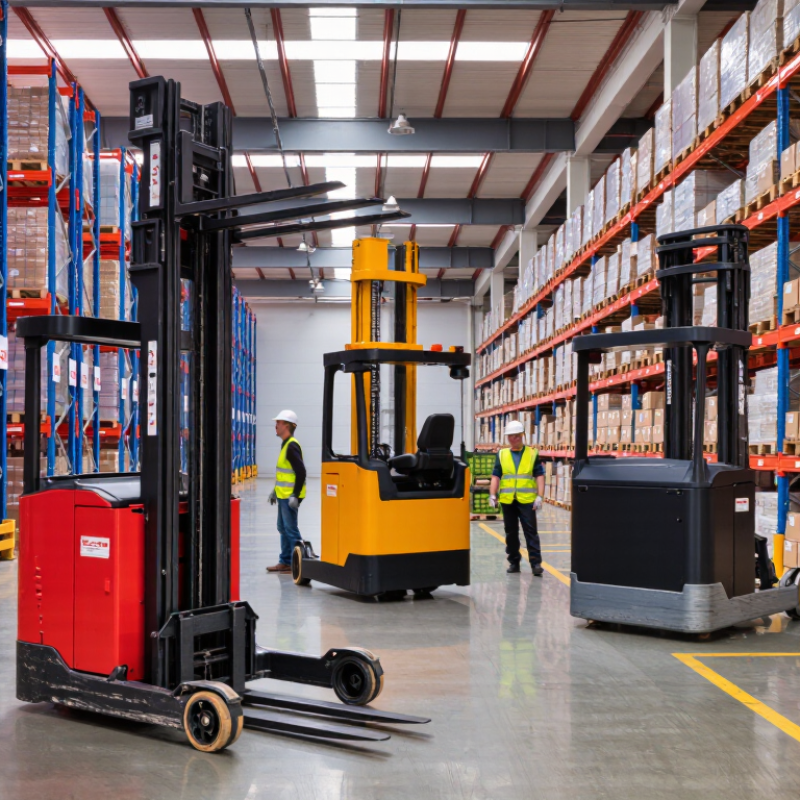
Choosing among the top stacker forklift manufacturers worldwide requires more than comparing brand names or published lifting capacities. A reliable review must examine real warehouse conditions, operator needs, service coverage, battery systems, and long-term maintenance costs. A compact electric stacker may move smoothly across a polished concrete floor, yet struggle on uneven loading areas or steep ramps. Small details matter.

Industrial Truck Association President Brian Feehan has stated, “Safety is the number one priority for the industrial truck industry.” That principle should guide every manufacturer comparison. Strong brands usually provide stable mast designs, clear visibility, emergency controls, and documented operator training. However, specifications can look better on paper than they feel during an eight-hour shift. Hands-on testing remains important.

This overview will assess leading manufacturers through product quality, lifting performance, ergonomics, energy efficiency, dealer support, and reliability. It will also consider regional availability, because a respected global brand may offer limited parts support in a smaller market. That can create unexpected downtime.

No ranking is perfectly objective. Warehouse layouts differ. Budgets differ. Operator experience differs. A basic walkie stacker may suit a retail back room, while a ride-on model may better serve a busy distribution center. Buyers should question impressive claims and request practical demonstrations. The best stacker forklift is not always the most expensive one. It is the machine that works safely, consistently, and economically in the environment where it will actually operate.
Top Stacker Forklift Manufacturers Worldwide?

What Is a Stacker Forklift and How Does It Work?

A stacker forklift is a compact powered truck designed to lift and place palletized loads. Unlike a counterbalance forklift, it often works without large rear counterweights. Its narrow chassis suits aisles, storage rooms, and loading areas. The operator guides the machine using a handle or standing platform. Electric motors drive the wheels, while a hydraulic system raises the mast and forks. Some models also move the mast forward for deeper rack access.

Capacity depends on lift height, load center, battery condition, and floor quality. A 2023 report from the Industrial Truck Association identifies walkie stackers as common solutions for low-volume pallet handling and short travel distances. OSHA reports approximately 35,000 serious and 62,000 non-serious powered industrial truck injuries annually in the United States. These figures cover several truck types, not stackers alone. Still, they show why operating speed, visibility, and training matter. The simple definition hides real risks. A small machine can still destabilize a tall load.

Tips: Check the rated capacity plate before lifting. Keep the load centered and close to the mast. Walk slowly over uneven flooring. Inspect forks, brakes, wheels, and battery connections each shift. A 2024 report from the Material Handling Industry Association links safer material movement with planned equipment inspections and workforce training. Yet reports cannot replace site judgment. Measure aisle width, rack clearance, and turning space before purchase. Even experienced operators can misjudge a top-heavy pallet.

Key Factors for Comparing Stacker Forklift Manufacturers

Top Stacker Forklift Manufacturers Worldwide?

Comparing stacker forklift manufacturers requires more than checking lifting capacity or purchase price. Study the machine’s rated load, lift height, turning radius, battery system, and mast visibility. A warehouse aisle only 2.4 meters wide can expose poor steering design quickly. Ask for test data under realistic conditions, not only showroom demonstrations. Reliable manufacturers should provide clear specifications, operator manuals, maintenance schedules, and documented quality controls.

Field experience also matters. Speak with warehouse managers who use similar equipment every day. Their feedback can reveal battery downtime, noisy hydraulics, unstable loads, or difficult service access. Check the manufacturer’s technician training, spare-parts availability, warranty terms, and response time. A low initial price may become expensive when one unavailable sensor stops a shift. I have found that simple access panels often save more labor than impressive digital features. Still, user reviews can be incomplete, so verify important claims through independent inspections and trial operation.

Tips: Compare total ownership cost, not just the invoice. Request a loaded demonstration on your actual floor surface. Measure aisle clearance carefully. Inspect welds, forks, wheels, controls, and emergency functions. Ask how quickly common parts can arrive. Do not ignore operator comfort; awkward controls create fatigue during repetitive work. A small mistake here matters. Manufacturers that welcome technical questions usually show stronger expertise and accountability, although no supplier is perfect. Ask what the equipment cannot do.

Leading Stacker Forklift Manufacturers by Global Market Reach

Top Stacker Forklift Manufacturers Worldwide?

Leading Stacker Forklift Manufacturers by Global Market Reach

Global market reach involves more than shipping machines overseas. Leading stacker forklift manufacturers support warehouses through regional dealers, service centers, and parts networks. A buyer in Rotterdam, Dubai, or Melbourne needs similar support after delivery. Fast access to batteries, wheels, and control components can protect daily operations.

Manufacturers with broad reach usually offer electric stackers for narrow aisles, cold storage, and mixed warehouse floors. Their equipment may include adjustable forks, pedestrian controls, regenerative braking, and compact turning designs. However, specifications should be checked against local safety rules and site conditions. A powerful model is not always the most suitable choice.

Field experience often reveals practical differences. Operators notice handle balance, visibility, charging time, and smooth lifting before reading a brochure. Strong manufacturers collect this feedback and improve training materials, diagnostics, and maintenance procedures. Their global networks also help standardize service quality, though results can vary between dealers. That gap deserves attention. Market rankings may look convincing, but warranty response, technician skill, and spare-part availability require direct verification. Procurement teams should compare tested performance, operating costs, and local support rather than relying on production volume alone.

How Stacker Forklift Models Differ in Design and Applications

Top Stacker Forklift Manufacturers Worldwide?

How Stacker Forklift Models Differ in Design and Applications

Stacker forklifts differ mainly in lifting height, load capacity, mast design, and operator position. Walkie stackers suit short warehouse routes and lighter pallets. Their compact frames can turn inside narrow aisles. Straddle models handle varied pallet widths more effectively. Counterbalanced stackers provide better stability but require wider working space.

Electric walkie models usually lift between 1,000 and 2,000 kilograms, depending on configuration. Rider versions can improve productivity during repeated warehouse transfers. High-lift models reach several metres, but elevated loads demand disciplined speed control. The 2024 MHI Annual Industry Report found that 55% of supply chain professionals planned to increase technology investment. That supports interest in more connected handling equipment. Yet automation alone cannot correct poor aisle planning.

Application matters more than maximum capacity. Cold-storage facilities need batteries and controls suited to low temperatures. Retail backrooms often prioritise quiet operation and tight turning radii. Manufacturing sites may require longer forks or reinforced frames. The U.S. Occupational Safety and Health Administration reports about 85 annual forklift-related fatalities and 34,900 serious injuries. These figures underline the value of visibility, training, and load stability. I would not choose a model from capacity alone. Real floors are uneven, operators vary, and published performance figures may assume ideal conditions.

Top Stacker Forklift Manufacturers Worldwide? - How Stacker Forklift Models Differ in Design and Applications
Stacker Forklift Model Typical Rated Capacity Typical Lift Height Operator Position Steering and Drive Design Typical Power System Recommended Operating Surface Key Design Characteristics Common Applications Main Advantages Important Limitations
Manual Hydraulic Stacker 500–1,500 kg 1.0–3.0 m Pedestrian, walk-behind Manual steering with hand-pumped hydraulic lifting Human-powered lifting; no traction battery Smooth, level indoor floors Simple mast, hydraulic pump handle, compact chassis and low maintenance requirements Light-duty warehouses, workshops, retail back rooms and occasional pallet positioning Low purchase cost, easy servicing and no battery charging infrastructure Slow lifting and travel; unsuitable for frequent long-distance movement or high throughput
Semi-Electric Stacker 800–1,500 kg 1.6–3.5 m Pedestrian, walk-behind Electric lift with manual or powered travel Lead-acid or lithium-ion battery for lifting and, on some versions, travel Smooth indoor floors with limited gradients Combines powered lifting with a simple walking-control arrangement Small distribution centers, manufacturing cells and intermittent pallet handling Less physical effort than a fully manual model and lower cost than a powered pedestrian truck Lower productivity and less precise travel control than fully electric designs
Walkie Electric Stacker 1,000–2,000 kg 1.6–4.5 m Pedestrian, walk-behind Electric travel and lift controlled from a tiller arm Lead-acid or lithium-ion battery Level, smooth indoor floors Compact turning radius, regenerative braking on many designs and programmable travel speed Short-distance pallet transport, block stacking and order replenishment Good maneuverability, reduced operator fatigue and efficient use of narrow aisles Walking speed limits productivity over long routes; generally not intended for outdoor use
Counterbalanced Walkie Stacker 1,000–2,000 kg 1.6–4.0 m Pedestrian, walk-behind Electric drive with an integrated counterweight instead of extended front outriggers Lead-acid or lithium-ion battery Indoor floors and carefully managed smooth outdoor surfaces Can handle closed-bottom pallets and loads close to the floor without front support legs Mixed pallet types, production areas and applications requiring close load approach Greater pallet flexibility and useful load access compared with outrigger stackers Usually heavier, more expensive and less compact than standard outrigger designs
Reach Stacker 1,000–2,000 kg 2.5–6.0 m Pedestrian, walk-behind Electric drive with a mast or fork carriage that reaches forward Lead-acid or lithium-ion battery Smooth indoor warehouse floors Extending mast or carriage allows load placement beyond the front legs and improves high-level access High-density storage, selective racking and facilities with limited aisle width Higher lift capability and better space utilization than basic walkie stackers Higher center of gravity at reach; requires trained operation and suitable rack clearance
Straddle Stacker 1,000–2,000 kg 1.6–4.5 m Pedestrian, walk-behind Electric drive with adjustable or fixed straddle legs Lead-acid or lithium-ion battery Level indoor floors Straddle legs support the load from both sides and can accommodate selected pallet configurations Open-bottom and closed-bottom pallets, mixed pallet sizes and narrow storage areas Versatile pallet handling and better stability than some compact counterbalanced layouts Leg spacing may restrict pallet entry; floor obstructions and uneven surfaces can reduce usability
Ride-On Stacker 1,200–2,000 kg 2.5–5.5 m Stand-on platform or foldable rider platform Powered travel and lift with tiller or rider controls Lead-acid or lithium-ion battery Smooth indoor floors and long internal travel routes Rider platform increases travel speed and reduces walking distance for the operator Distribution centers, cross-docking areas and repetitive pallet transport Higher productivity over longer distances and reduced operator fatigue Requires more operating space and safety controls; less suitable for very tight work areas
Heavy-Duty Electric Stacker 2,000–3,000 kg 1.6–4.0 m Pedestrian or stand-on, depending on configuration High-torque electric drive with reinforced mast and chassis High-capacity lead-acid or lithium-ion battery Industrial indoor floors; limited outdoor use when specified by the manufacturer Reinforced forks, larger load wheels, stronger mast components and higher thermal capacity Heavy pallets, metal products, building materials and manufacturing operations Handles heavier loads while producing less exhaust and noise than internal-combustion equipment Higher acquisition cost, larger turning radius and greater floor-loading requirements
Stainless-Steel or Corrosion-Resistant Stacker 1,000–1,500 kg 1.6–4.0 m Pedestrian, walk-behind Electric travel and lift with protected controls and components Electric battery; sealed or protected components may be specified Wet, wash-down or corrosion-prone indoor environments, subject to equipment rating Corrosion-resistant frame, protected wiring and components designed for demanding hygiene conditions Food processing, beverage production, pharmaceuticals and chemical handling areas Improved resistance to moisture, cleaning agents and corrosive atmospheres Higher purchase price; cleaning procedures and environmental ratings must be checked carefully
Explosion-Protection Stacker 1,000–1,500 kg 1.6–4.0 m Pedestrian, walk-behind Electric drive with protected electrical and mechanical components Specially configured battery-electric system Approved hazardous-area environments only Designed with ignition-control measures and equipment certification for specified hazardous zones Chemical processing, solvent storage and other regulated hazardous locations Supports material handling where conventional electric equipment may not be permitted Must match the exact hazardous-area classification; specialized service and compliance are required

Safety, Service, and Selection Criteria for Buyers

Top Stacker Forklift Manufacturers Worldwide?

Safety, Service, and Selection Criteria for Buyers

Reliable stacker forklift manufacturers should demonstrate more than production capacity. Buyers should examine safety records, operator training, and testing procedures. Ask for clear load charts, stability data, and maintenance instructions. Safety begins with the machine’s daily use. Request an operating demonstration with a realistic pallet. Watch braking, steering, mast movement, and visibility in narrow aisles. Small details matter. Shortcuts can become expensive.

Service quality often separates a dependable supplier from a temporary solution. A capable supplier provides trained technicians, accessible spare parts, and practical response times. Ask about warranty coverage and scheduled maintenance. Parts availability matters during peak warehouse periods. Remote support can help, but it cannot replace skilled field service. Promises are easy to make. Selection should also match the working environment. Check capacity, lift height, aisle width, floor condition, and battery requirements. Do not choose only by purchase price.

Worldwide sourcing can offer useful options, but distance may complicate support. Manufacturers with regional service partners usually provide stronger continuity. Documentation should be clear, current, and easy for operators to understand. Independent inspections can reveal issues that sales demonstrations hide. Some buyers overlook noise, charging space, or operator fatigue. That choice may seem harmless at first. It may later reduce productivity and increase risk. A careful evaluation should include real operators, actual loads, and repeated handling cycles. Nakne.

Top Stacker Forklift Manufacturers Worldwide: Safety, Service, and Selection Criteria

Typical rated-capacity ranges help buyers narrow the right stacker configuration before comparing safety features, service coverage, spare-parts availability, operator training, and total cost of ownership.

How to use this chart: Pedestrian and straddle stackers are commonly selected for lighter warehouse applications, while counterbalance and reach configurations support higher loads or more demanding storage layouts. Always verify the manufacturer’s rated capacity at the required lift height, load center, aisle width, and operating environment.

FAQS

What should buyers compare when selecting a stacker forklift manufacturer?

Compare rated load, lift height, turning radius, battery system, visibility, and total ownership cost. Purchase price alone can mislead.

Why is a loaded demonstration important?

It shows braking, steering, mast movement, and stability with a realistic pallet. Ask for testing on your actual floor surface.

How can warehouse aisle width affect equipment selection?

Measure clearance carefully. A 2.4-meter aisle can expose poor steering or limited turning performance very quickly.

What service information should manufacturers provide?

Request operator manuals, maintenance schedules, warranty terms, technician training details, and spare-parts response times. Clear documents matter.

How does local support influence purchasing decisions?

Regional technicians, service centers, and parts networks can reduce downtime. A missing sensor may stop an entire shift.

Which safety features deserve close inspection?

Check load charts, stability data, emergency functions, braking, steering, visibility, and control layout. Test them with trained operators.

Why should operators participate in equipment evaluations?

Operators notice handle balance, charging time, noise, visibility, and control fatigue. Brochures rarely show those small daily problems.

Is a low purchase price always the best choice?

No. Maintenance, charging, parts, downtime, and training can make inexpensive equipment costly over time.

What questions should buyers ask about equipment limitations?

Ask what the equipment cannot do. This answer may reveal unsuitable floors, height limits, battery constraints, or narrow operating conditions.

Are market rankings enough to identify a reliable manufacturer?

No. Verify important claims through independent inspections, trial operation, user interviews, and repeated handling cycles. Reviews can be incomplete.

Conclusion

A stacker forklift is a compact material-handling vehicle designed to lift, move, and position pallets in warehouses, storage areas, and light industrial environments. It typically uses an electric drive system, lifting mast, forks, and operator controls to raise loads to different heights. When comparing manufacturers, buyers should consider lifting capacity, maximum lift height, battery performance, maneuverability, build quality, customization options, and total ownership cost. Global market reach can also reflect production capability, product availability, technical support, and replacement-parts coverage.

Stacker forklift models vary from walk-behind units for narrow aisles to ride-on or platform designs for longer travel distances and heavier workloads. The right choice depends on warehouse layout, floor conditions, load dimensions, operating hours, and storage requirements. Safety features such as stable mast design, load protection, braking systems, visibility, emergency controls, and operator training are essential. Buyers should also evaluate warranty terms, maintenance response, service accessibility, and long-term reliability to select equipment that supports safe, efficient, and cost-effective operations.

Charlotte

Charlotte

Charlotte is a seasoned marketing professional with a deep understanding of the company's portfolio and a passion for elevating its presence in the market. With a keen eye for detail and a commitment to excellence, she ensures that our professional blog is regularly updated with insightful articles......