In the rapidly evolving warehouse sector, innovation plays a key role. One significant advancement is the introduction of the robot forklift. This technology is not just about automation; it is also about efficiency and productivity. A robot forklift can perform tasks that humans find laborious and repetitive. This leads to safer work environments and reduced operational costs.
Many warehouses face challenges such as limited space and high demand. A robot forklift addresses these challenges effectively. It can navigate tight areas with precision, ensuring optimal space utilization. Additionally, these machines can operate around the clock, which maximizes throughput.
However, adopting a robot forklift is not without its challenges. Initial costs can be high, and the learning curve can be steep. It is essential to assess whether the benefits outweigh these drawbacks. As with any technology, understanding the specific needs of your warehouse is crucial. The transition can be complex, but the potential rewards make it a compelling option.
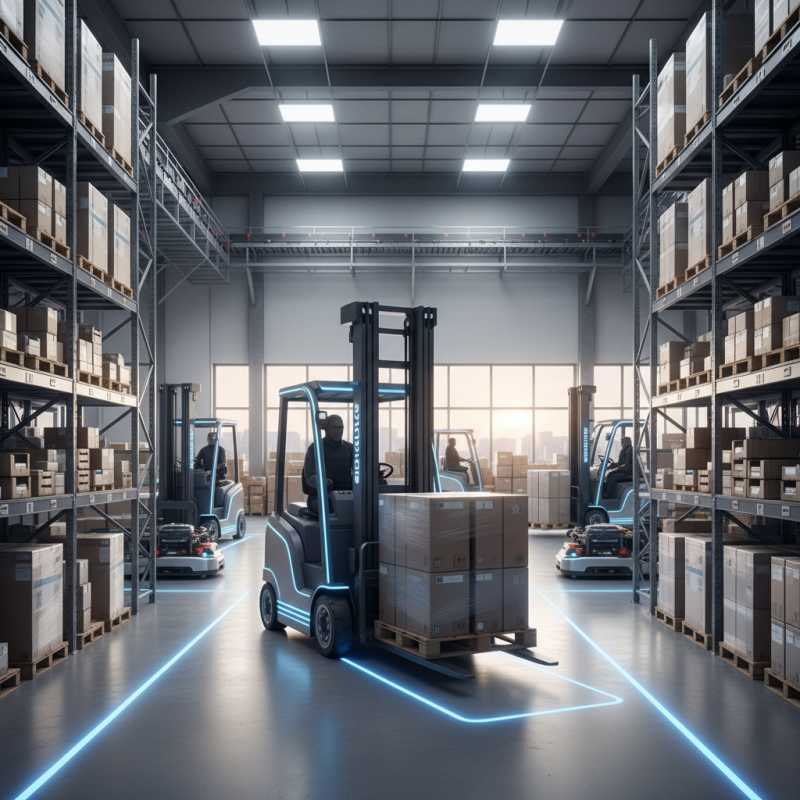
Robot forklifts have revolutionized warehouse operations. They automate heavy lifting, improving efficiency significantly. According to the Warehouse Robotics Report 2023, facilities using robotic forklifts can increase productivity by up to 40%. This is crucial in an era where speed and accuracy are vital.
These machines excel in precise navigation and handling of goods. They utilize advanced sensors and AI algorithms to optimize routes, minimizing errors. The decrease in human labor also reduces the risk of workplace accidents. Data indicates that companies adopting these robots see a reduction in injury rates by approximately 30%. However, integrating robot forklifts is not without challenges. Proper training is essential; staff must be prepared to work alongside these advanced systems.
Maintenance can be complex, and costs may spike unexpectedly. Warehouse managers need to balance benefits against potential downsides. Familiarity with the technology is crucial for maximizing its advantages. Also, careful consideration of layout and workflows is necessary for seamless integration.
| Feature | Description | Benefits |
|---|---|---|
| Autonomy | Robot forklifts can operate without direct human control, using AI and sensors. | Increased efficiency and reduction in labor costs. |
| Safety Features | Equipped with sensors to avoid obstacles and ensure safe operation. | Reduces the chance of accidents and enhances workplace safety. |
| Operational Flexibility | Can be programmed for various tasks and routes within the warehouse. | Adaptable to changing warehouse layouts and processes. |
| Cost Efficiency | Lower maintenance and operational costs compared to traditional forklifts. | Long-term savings and improved ROI. |
| Data Integration | Can be integrated with warehouse management systems for real-time monitoring. | Enhances operational visibility and decision-making. |
: Robot forklifts automate heavy lifting tasks. They improve overall efficiency and productivity in warehouse operations.
Productivity can increase by up to 40% in facilities using robotic forklifts. This is a significant gain for fast operations.
Yes, they lower the risk of workplace accidents. Advanced sensors help them navigate safely, reducing injury rates.
Proper training is essential to work alongside robotic systems. Staff should understand the technology for effective operation.
Maintenance can be complex and costs can spike unexpectedly. Companies need to weigh benefits against potential downsides.
Warehouse layout significantly impacts choice. Some forklifts are better for narrow aisles, while others work well in larger spaces.
Improved inventory accuracy helps minimize errors. This allows workers to focus on strategic tasks rather than manual lifting.
Assessing workload, material types, and operational flow are crucial. These factors help in selecting the right equipment for tasks.
Continuous maintenance is vital. A well-maintained robot forklift yields better performance and long-term benefits.
Initial costs can be high, but consider the long-term productivity gains. Weighing these factors helps in making informed decisions.
Robot forklifts are revolutionizing warehouse operations by offering enhanced efficiency and automation. Understanding their fundamentals, businesses can recognize the significant advantages they bring, such as reduced labor costs, increased safety, and improved accuracy in material handling. A comparative analysis reveals that robot forklifts often outperform traditional forklifts in terms of productivity and operational consistency.
When selecting a robot forklift, several factors should be considered, including the specific needs of the warehouse, the layout of the facility, and the technology's compatibility with existing systems. As the industry evolves, future trends indicate a growing integration of advanced technologies like AI and IoT in robot forklifts, paving the way for smarter and more efficient warehousing solutions. Embracing robot forklifts could be the key to staying competitive in an increasingly automated logistics landscape.

 SCP Technology