What Is the Top Pallet Robot in China for Global Buyers?

Time:2026-09-18 Author:Ethan
0%

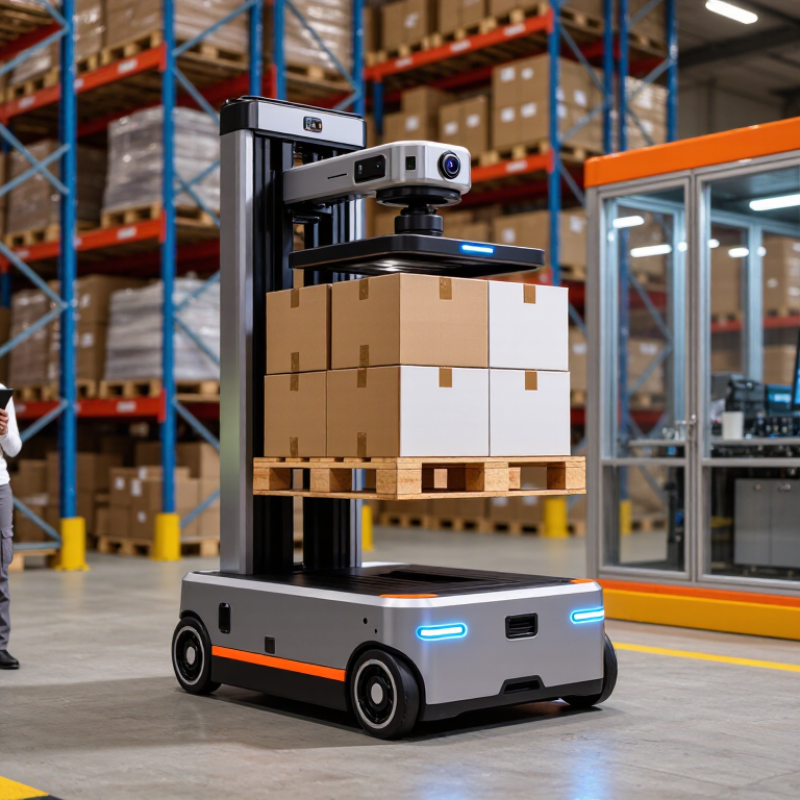
Choosing the top pallet robot in China requires more than comparing prices or polished factory videos. Global buyers need evidence from real warehouse conditions, including pallet sizes, floor quality, payload weight, aisle width, and daily cycle demands. A reliable pallet robot should move steadily, position loads accurately, and communicate clearly with warehouse management systems. Small details matter. A two-centimeter alignment error can affect an entire storage lane.

This guide examines Chinese pallet robot suppliers through practical and professional criteria. These include engineering experience, component quality, software stability, safety design, installation support, and long-term maintenance. Buyers should request test records, factory references, risk assessments, and clear performance limits. Compliance documentation must match the destination market. Certification names alone do not prove safe operation.

No machine is perfect. Even a strong system may require better floor preparation, network coverage, or operator training. We will also question common sales claims, especially promises of unlimited uptime or instant integration. Those claims deserve testing. A useful comparison should show how the robot performs during peak shifts, battery changes, emergency stops, and mixed pallet handling.

The right choice depends on more than brand reputation. It depends on fit. By reviewing technical evidence and supplier responsiveness, global buyers can identify a pallet robot that supports safer, more consistent warehouse operations. That evaluation may take longer than expected, but rushed automation decisions often cost more later.
What Is the Top Pallet Robot in China for Global Buyers?

How Pallet Robots Work: AMRs, AGVs, and Robotic Palletizers Compared

What Is the Top Pallet Robot in China for Global Buyers?

A pallet robot is not one machine. It usually combines an AMR, AGV, or robotic palletizer. The right choice depends on floor layout, pallet weight, turnover, and labor conditions. IFR’s World Robotics 2024 report recorded 541,302 industrial robot installations worldwide in 2023. However, this figure covers all industrial robots, not pallet applications. Buyers should avoid treating market growth as proof of suitability.

AMRs use cameras, scanners, and software to navigate changing routes. They suit warehouses with mixed traffic, temporary storage, and frequent layout changes. AGVs follow defined paths using magnetic tape, markers, or mapped guidance. They often provide steadier movement in repetitive lanes. Robotic palletizers use arms, grippers, and conveyors to stack cartons at a fixed station. They usually deliver higher stacking speed, but need guarding, accurate carton placement, and more installation space. Less flexible. More predictable.

MHI’s 2024 Annual Industry Report found that 55% of respondents expected increased investment in supply-chain technology. For global buyers, a Chinese pallet robot should be judged through site trials, not catalog claims. Check payload accuracy, battery runtime, recovery after obstruction, spare-part availability, and software language support. Ask for test records under real carton sizes. One weakness remains easy to overlook: an AMR can move smoothly, yet fail when pallets are damaged or floors are uneven. A robotic palletizer may stack quickly, but poor carton quality can reduce stability. The top system is therefore the one that performs reliably in the buyer’s actual warehouse, with documented safety controls and measurable service response times.

What Is the Top Pallet Robot in China for Global Buyers?

This comparison shows typical pallet-handling throughput ranges for autonomous mobile robots (AMRs), automated guided vehicles (AGVs), and robotic palletizers. AMRs and AGVs are mainly used for pallet transport, while robotic palletizers are designed for high-speed pallet building at fixed production lines. Actual performance depends on pallet size, load weight, travel distance, layout, safety requirements, and integration design.

Key Specs: 1,000–2,000 kg Payload and 1,200×1,000 mm Pallets

What Is the Top Pallet Robot in China for Global Buyers?

For global buyers, the strongest pallet robot is not simply the fastest model. It must handle 1,000–2,000 kg loads reliably. The target pallet size is 1,200×1,000 mm. This format appears widely in industrial and export warehouses. A suitable robot should maintain stable fork entry, accurate positioning, and safe movement under uneven loads. Load-center distance matters. A heavy product placed near the pallet edge can reduce real capacity.

According to the International Federation of Robotics, China installed 276,288 industrial robots in 2023. That represented about 51% of global installations. The figure shows strong manufacturing experience and a mature automation supply chain. However, installation volume does not guarantee warehouse performance. Buyers should request tested cycle data, including loaded travel, turning, lifting, and docking. MHI’s 2024 Annual Industry Report also identified robotics and automation as major investment priorities in supply chains.

A practical evaluation should include 1,000 kg and 2,000 kg trials. Test both centered and slightly offset loads. Check performance on ramps, expansion joints, and narrow aisles. Also verify battery endurance, charging time, remote diagnostics, and spare-part response. Safety functions should align with applicable industrial mobile-robot requirements, including ISO 3691-4 principles. The perfect specification does not exist. A robot may claim 2,000 kg, yet perform poorly with high or unstable cargo. Real warehouse tests matter more than impressive brochures.

China’s Top Candidates: Compare 600–1,200 Pallets per Hour and Uptime

What Is the Top Pallet Robot in China for Global Buyers?

China’s leading pallet robots now target 600 to 1,200 pallets per hour. That range looks impressive, but throughput depends on pallet size, load weight, stacking patterns, and travel distance. A system moving standard pallets across a short aisle may reach 1,200 pallets hourly. The same machine may deliver 700 under mixed warehouse conditions.

Real performance appears during sustained operation. Buyers should request test data covering at least eight hours, not only a short demonstration. Check pick accuracy, battery changes, blocked routes, and recovery after emergency stops. A 600-pallet system with stable output can outperform a faster machine that pauses frequently. Small delays multiply quickly beside a busy loading dock.

Uptime requires more than robot hardware. Look for spare-part access, remote diagnostics, local technicians, and clear maintenance procedures. Ask how the system performs during dust, uneven floors, or changing temperatures. These details often reveal practical reliability. A claimed 99.9% uptime may exclude scheduled maintenance, manual intervention, or software delays. That figure needs careful questioning.

My field experience suggests comparing useful hourly output, not advertised speed alone. Measure pallets completed, energy consumed, operator interventions, and recovery time. One overlooked weakness remains training. Even a capable system can lose productivity when staff cannot adjust routes or clear faults safely.

Global Compliance: CE, ISO 10218, and ISO 3691-4 for Export Projects

What Is the Top Pallet Robot in China for Global Buyers?

For global buyers, the top pallet robot is not simply the fastest model. Compliance must travel with the machine. The International Federation of Robotics reported 541,302 industrial robot installations worldwide in 2023. China represented about 51% of that total, showing its strong manufacturing depth and export experience.

A reliable export project should include CE conformity evidence, risk assessment, technical files, and clear operating instructions. ISO 10218 addresses industrial robot safety and integration. ISO 3691-4 is important when the system includes driverless industrial trucks, such as autonomous pallet movers. These standards are not interchangeable. A palletizing arm may comply with ISO 10218, while the mobile platform needs additional evaluation under ISO 3691-4. The exact scope depends on the complete system, guarding, software, and intended use. Small details matter.

Tips: Ask for the Declaration of Conformity, safety-function validation, and test records before purchase. Check whether documents describe the delivered configuration, not an older prototype. Request emergency-stop tests using realistic pallet loads. Also verify local importer duties and installation requirements. CE marking alone does not prove full project safety. I have seen technically strong machines delayed by incomplete manuals and unclear responsibilities. That part is easy to underestimate.

Buyer Evaluation: Score Integration, Safety, Service, and 3–5-Year ROI

For global buyers, the top pallet robot in China is not simply the fastest machine. It must integrate cleanly with conveyors, warehouse software, safety scanners, and existing pallet patterns. The International Federation of Robotics reported 541,302 industrial robots installed worldwide in 2023. China accounted for 276,288 installations, showing strong manufacturing depth. Yet installation volume does not guarantee reliable palletizing. During factory evaluations, buyers should request a live cycle test using their cartons, unstable loads, and target stacking height. Watch for recovery after a mispick. Small failures become expensive.

Safety needs evidence, not promises. Verify risk assessments against ISO 10218 and applicable local requirements. Check guarding, emergency stops, access control, and safe restart procedures. MHI’s 2024 Annual Industry Report found that 83% of respondents planned to increase supply-chain technology investment. Labor pressure is real. Service quality still decides uptime. Ask for local spare-parts coverage, remote diagnostics, technician response times, and mean time to repair. Measure it.

A credible three-to-five-year ROI model should include robot cost, grippers, integration, training, energy, maintenance, downtime, and rejected pallets. Compare these costs with labor savings and extra throughput, using conservative utilization. A 24-hour production assumption may look attractive but often fails during changeovers. I would score integration, safety, service, and ROI separately, then test the weakest score again. The “best” system may be slower, but easier to maintain.

What Is the Top Pallet Robot in China for Global Buyers? - Buyer Evaluation: Score Integration, Safety, Service, and 3–5-Year ROI

Evaluation Profile System Integration
Score / 25
Safety & Compliance
Score / 20
Global Service
Score / 20
Performance
Score / 15
3–5-Year ROI
Score / 20
Total
/ 100
Indicative Payback Best-Fit Application
Profile A — Full-System Integrator 23 18 17 14 18 90 24–32 months High-volume, multi-line warehouses
Profile B — Modular Robot Supplier 20 17 14 13 17 81 26–36 months Existing conveyor and warehouse systems
Profile C — Cost-Optimized OEM 17 15 11 13 18 74 20–30 months Budget-sensitive, standardized operations
Profile D — Specialized Palletizing Provider 18 17 13 14 15 77 28–38 months High-speed palletizing and depalletizing
Profile E — Emerging Export-Focused Supplier 16 15 10 12 14 67 30–42 months Small pilot projects and regional deployment

Buyer-screening benchmark based on commonly used procurement criteria: PLC/WMS/ERP compatibility, safety-control architecture, documentation, spare-parts availability, remote support, throughput stability, labor savings, maintenance cost, and expected equipment life. Scores are normalized for comparable project conditions; actual ROI depends on pallet mix, shifts, labor rates, integration scope, and local compliance requirements.

FAQS

What throughput should global buyers expect from a pallet robot?

Leading systems may target 600 to 1,200 pallets per hour. Real output depends on pallet size, load weight, stacking pattern, and travel distance. A short aisle may support 1,200 pallets hourly. Mixed warehouse conditions may reduce output to 700.

How should buyers verify advertised performance?

Request test data covering at least eight hours. Do not rely on a short demonstration. Measure completed pallets, pick accuracy, battery changes, blocked routes, and emergency-stop recovery. Speed is not uptime.

Why can a slower robot perform better?

A stable 600-pallet system may outperform a faster machine with frequent pauses. Small delays multiply near a busy loading dock. Compare useful hourly output, not advertised speed alone. I may still overvalue speed during early evaluations.

What conditions should be included in a live test?

Use your cartons, pallet sizes, unstable loads, and target stacking height. Test uneven floors, dust, and changing temperatures. Watch recovery after a mispick. Real materials reveal weaknesses quickly.

Which systems integrate well with existing warehouses?

The system should connect cleanly with conveyors, warehouse software, safety scanners, and existing pallet patterns. Ask for a live cycle test inside your workflow. A technically impressive robot may still struggle with poor integration.

How can buyers evaluate robot safety?

Request documented risk assessments and applicable safety compliance evidence. Check guarding, emergency stops, access controls, and safe restart procedures. Operators should clear faults without unsafe improvisation. Safety promises need practical proof.

What service support is essential after installation?

Ask about local spare parts, remote diagnostics, technician response times, and maintenance procedures. Confirm how faults are reported and resolved. Measure repair time during a realistic service exercise. Training is often overlooked.

How should buyers calculate three-to-five-year ROI?

Include robot cost, grippers, integration, training, energy, maintenance, downtime, and rejected pallets. Compare these costs with labor savings and added throughput. Use conservative utilization rather than continuous twenty-four-hour production. Changeovers can quietly damage the forecast.

What makes a pallet robot the best overall choice?

The best choice balances integration, safety, service, and long-term return. A slower system may be easier to maintain and recover. Score each area separately, then retest the weakest result. The “best” answer may remain uncertain.

Conclusion

Choosing the right pallet robot in China requires more than comparing headline speed. This guide explains how AMRs, AGVs, and robotic palletizers differ in navigation, flexibility, loading methods, and installation requirements. It focuses on practical specifications for global buyers, including payloads of 1,000–2,000 kg, compatibility with 1,200×1,000 mm pallets, and expected throughput ranging from 600 to 1,200 pallets per hour. It also highlights the importance of uptime, changeover efficiency, warehouse layout, and integration with conveyors, warehouse management systems, and existing automation.

For export projects, buyers should verify documentation and conformity with relevant requirements such as CE, ISO 10218, and ISO 3691-4, depending on the system design and destination market. A balanced evaluation should score each solution for integration capability, functional safety, technical support, spare-parts availability, training, and lifecycle cost. Comparing these factors over a three-to-five-year period helps buyers select a reliable pallet robot that delivers measurable productivity and return on investment.

Ethan

Ethan

Ethan is a seasoned marketing professional with a deep expertise in our company's innovative product line. With a passion for sharing knowledge and insights, he takes the lead in regularly updating our corporate blog, where he explores industry trends, product features, and effective marketing......