China Top Automated Guided Vehicle Project Manufacturer?

Time:2026-10-23 Author:Liam
0%

Choosing China’s top Automated Guided Vehicle Project manufacturer requires more than comparing catalog prices. A capable partner should prove experience in warehouse, factory, and hospital logistics. It should also explain how its vehicles perform in real operating conditions.

Look for evidence from completed installations, not polished claims alone. Ask for project references, load data, route layouts, and commissioning records. A reliable manufacturer can discuss navigation accuracy, battery performance, obstacle detection, and software integration in practical terms. Factory details matter too. Inspect assembly quality, testing procedures, spare-part availability, and technician training. Small details reveal a lot.

Safety comes first.

A professional supplier should support risk assessments, emergency-stop testing, speed control, and clear operator procedures. It should understand regional standards and provide suitable technical documentation for the destination market. However, no manufacturer is perfect. Some projects experience delayed integration, changing production layouts, or communication gaps between teams. These weaknesses deserve honest discussion.

The strongest supplier is not always the largest one. It is the company that measures results, reports limitations, and improves after installation. Request acceptance criteria before signing. Confirm delivery milestones, software responsibilities, maintenance response times, and upgrade policies. A careful evaluation may take longer, but it can prevent expensive disruption later. This guide examines the practical factors behind China’s leading manufacturers and explains how buyers can identify a trustworthy project partner.
China Top Automated Guided Vehicle Project Manufacturer?

Definition and Role of Automated Guided Vehicle Projects

China Top Automated Guided Vehicle Project Manufacturer?

Definition and Role of Automated Guided Vehicle Projects

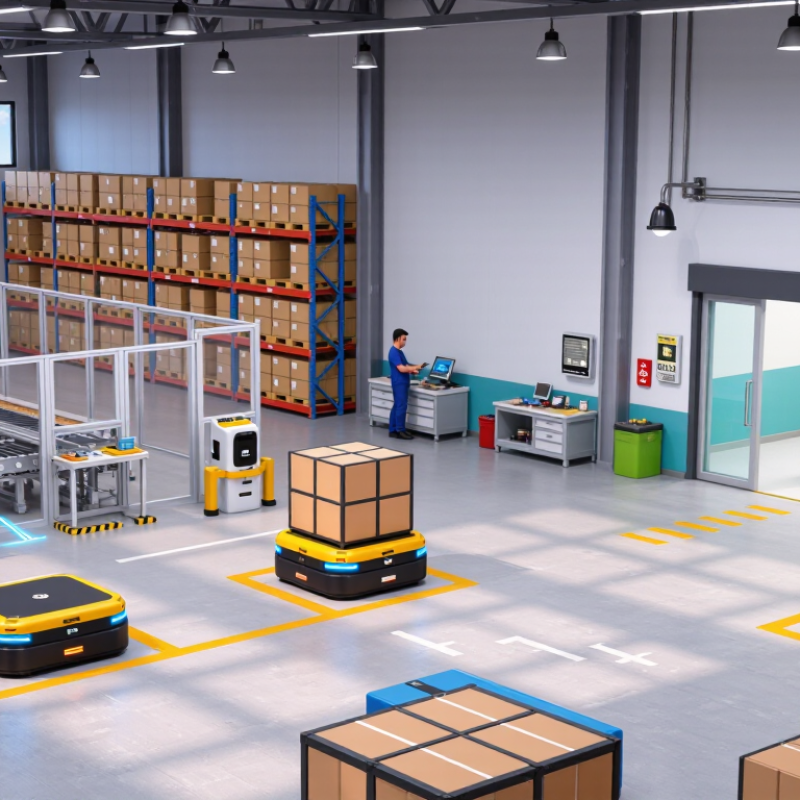
An automated guided vehicle project combines mobile robots, software, charging systems, and workplace planning. These vehicles transport materials without continuous manual driving. They follow magnetic paths, floor markers, laser maps, or digital instructions.

A complete project includes process analysis, vehicle selection, route design, installation, testing, and operator training. The vehicle is only one part.

In a warehouse, an AGV may collect a pallet from receiving and deliver it to a storage lane. At a production line, it can carry metal bins between workstations.

Sensors slow the vehicle near people, corners, and loading points. The control system records missions, traffic, battery status, and delivery times.

Reliable projects begin with real site data, including aisle width, floor conditions, payload weight, and shift patterns. Small measurement errors can create large delays.

Manufacturing capability matters, but project discipline matters more. An experienced manufacturer should provide load testing, safety checks, software integration, and maintenance guidance.

Factory acceptance tests can expose weak navigation, poor docking accuracy, or unstable communication. These problems are uncomfortable, yet useful. No deployment is perfect on its first day.

Routes may need adjustment after workers use them naturally. Battery planning may also require revision during peak shifts. Transparent reports, traceable testing records, and responsive technical support help customers make safer decisions.

Key Technologies Used in Chinese AGV Manufacturing

China’s automated guided vehicle manufacturing increasingly depends on integrated control, sensing, and mobility technologies. The strongest project manufacturers do more than assemble carts. They match vehicle design with factory routes, floor conditions, load weight, and production rhythm.

Laser radar supports real-time mapping and obstacle detection. Cameras can recognize pallets, lanes, and warning signs. Some systems combine SLAM navigation with magnetic markers, QR codes, or reflectors for greater positioning stability. This mixed approach matters when metal racks, dust, or changing light disturb sensors. It is not perfect.

Fleet management software assigns tasks, controls traffic, and records battery status. Industrial controllers connect the vehicle with lifts, conveyors, doors, and warehouse systems. Reliable projects also use redundant braking, emergency stops, speed zones, and audible alerts. Testing should include narrow aisles, uneven floors, network interruptions, and partially loaded pallets. A polished demonstration can hide practical weaknesses. Engineers need production data, not only impressive videos. Battery temperature, charging cycles, wheel wear, and stopping distance deserve regular inspection. Compliance with relevant safety standards, including ISO 3691-4 where applicable, strengthens project credibility. Yet even well-tested AGVs may require route changes after operators reveal an overlooked bottleneck. That feedback is valuable.

Key Technologies Used in Chinese AGV Manufacturing

The chart compares representative positioning accuracy values commonly specified for industrial AGV systems. Lower values indicate higher positioning precision. Actual results vary according to vehicle design, site conditions, floor quality, sensors, and control algorithms.

Leading Capabilities of China’s AGV Project Manufacturers

China Top Automated Guided Vehicle Project Manufacturer?

China’s leading AGV project manufacturers compete through engineering depth, not simple vehicle volume. According to the International Federation of Robotics, China installed 276,288 industrial robots in 2023, representing about 51% of global installations. This industrial scale supports stronger AGV integration capabilities, including navigation, scheduling, charging, and warehouse software.

Field experience matters. A capable project manufacturer studies aisle width, floor joints, pallet weight, turning radius, and peak dispatch volume before proposing equipment. Interact Analysis has reported continued growth in mobile robot demand across logistics and manufacturing. However, project performance depends on site conditions. A smooth demonstration may fail when forklifts, workers, dust, and irregular pallets enter the same route.

Technical teams in China increasingly use laser navigation, visual guidance, fleet management systems, and production-system interfaces. They also provide simulation, pilot testing, operator training, and local maintenance support. These services reduce commissioning risks. The best projects measure travel time, delivery accuracy, battery availability, and recovery time after obstacles. Numbers reveal more than attractive specifications.

Still, some proposals overstate autonomy. A vehicle that needs frequent manual recovery is not truly efficient. The RIA and ISO safety frameworks also show why risk assessment must accompany automation planning. Buyers should request acceptance-test records, failure logs, spare-parts plans, and verified references. This is less exciting, but more reliable. A strong manufacturer should explain limitations clearly, even when the answer is inconvenient.

How to Evaluate an AGV Manufacturer for Industrial Projects

China Top Automated Guided Vehicle Project Manufacturer?

Choosing an AGV manufacturer for an industrial project requires more than comparing prices. Factory experience matters. Ask for completed projects with similar loads, aisle widths, floor conditions, and traffic patterns. A reliable supplier should explain navigation accuracy, battery performance, safety circuits, and recovery procedures in practical terms.

The International Federation of Robotics reported 541,302 industrial robot installations worldwide in 2023. This growth shows stronger automation demand, but AGV success still depends on site integration. Review the manufacturer’s testing records, software interfaces, maintenance response time, and spare-parts availability. Request measurable data, such as positioning tolerance, charging cycles, uptime, and average fault recovery time. A polished demonstration can hide difficult real-world conditions. I have learned that uneven floors and changing production routes often expose weaknesses.

Tips: Visit an operating project, not only a showroom. Test emergency stops, blocked routes, manual recovery, and mixed pedestrian traffic. Check whether the supplier provides layout simulation, operator training, cybersecurity controls, and documented acceptance criteria. The safety design should align with applicable machinery and workplace standards. Also, ask for a pilot phase with clear performance targets. A cheaper vehicle may create higher integration costs later. No checklist catches every floor crack. Allow room for review, correction, and honest feedback before full deployment.

Applications and Future Development of AGV Systems

Automated Guided Vehicles (AGVs) are moving beyond simple pallet transport. In warehouses, they carry bins between storage aisles and picking stations. In factories, they deliver components to assembly cells at scheduled intervals. Hospitals can use them for sealed supplies, linen, and meal carts. The best project manufacturer is not defined by vehicle count alone. It should understand floor conditions, traffic rules, load weights, and software integration. A practical site survey matters more than a polished brochure. Narrow aisles expose weak navigation quickly.

Future AGV systems will combine safer sensing, smarter fleet coordination, and flexible route planning. Cameras, laser scanners, and mapping software can help vehicles recognize temporary obstacles. These may include misplaced cartons or cleaning carts. Cloud dashboards can reveal waiting time, battery cycles, and repeated congestion. However, connectivity can become a weakness. A local control layer remains valuable when networks fail. Human workers also need clear signals and simple recovery procedures. Technology should reduce hesitation, not create another screen to monitor.

Electric power improvements may support longer shifts and faster charging. Modular platforms could move a rack today and a different fixture tomorrow. This sounds efficient, but standardization remains difficult across buildings. Data quality is another concern. Poor maps produce poor decisions. During testing, teams should measure delivery accuracy, blocked-route frequency, recovery time, and worker acceptance. No deployment is perfect. A reliable manufacturer documents failures, updates risk controls, and leaves room for redesign.

FAQS

How should I evaluate an AGV project manufacturer for an industrial site?

Review similar projects involving matching loads, aisle widths, floor conditions, and traffic patterns. Request data on positioning tolerance, uptime, charging cycles, and fault recovery. Visit a working site, not only a showroom. A polished demonstration proves little.

What site details should a manufacturer inspect before proposing AGV equipment?

The team should measure aisle width, floor joints, pallet weight, turning radius, and peak dispatch volume. It should also study workers, forklifts, dust, and irregular pallets. Narrow aisles expose weak navigation quickly.

Which performance measurements matter after deployment?

Measure delivery accuracy, travel time, battery availability, blocked-route frequency, and recovery time. Compare results with written acceptance targets. Numbers reveal more than attractive specifications. Still, measurements can miss worker frustration.

How can I test an AGV system before full deployment?

Use a pilot phase with clear performance targets and documented acceptance criteria. Test emergency stops, blocked routes, manual recovery, and mixed pedestrian traffic. Include uneven floors and changing production routes. Test it properly.

What navigation and software capabilities should an AGV system provide?

Suitable systems may use laser guidance, cameras, mapping software, and fleet coordination. They should connect with warehouse or production systems when needed. A local control layer remains useful during network failures. Poor maps produce poor decisions.

How should safety and human recovery be handled?

The design should follow applicable machinery and workplace safety requirements. Workers need clear signals and simple recovery procedures. Ask for risk assessments, failure logs, and emergency-stop test records. Humans still matter.

What maintenance support should an industrial buyer request?

Confirm response times, spare-parts availability, operator training, software support, and local maintenance coverage. Request records showing common failures and average recovery times. Frequent manual recovery may reveal weak autonomy. That deserves review.

Can future AGV systems adapt to changing factory tasks?

Modular platforms may move racks, fixtures, bins, or components across different workflows. Flexible routes can respond to temporary obstacles, such as cartons or cleaning carts. Standardization across buildings remains difficult. I would allow redesign time.

Conclusion

An Automated Guided Vehicle Project involves the planning, design, integration, and deployment of driverless vehicles for transporting materials in industrial environments. These systems typically combine navigation technologies, sensors, industrial control software, wireless communication, battery management, and safety devices to move goods accurately and efficiently. Chinese AGV project manufacturers are increasingly capable of delivering customized solutions, from vehicle development and route planning to system integration, testing, installation, and after-sales support.

When evaluating a manufacturer, businesses should consider engineering expertise, production quality, navigation accuracy, safety standards, customization capabilities, delivery capacity, and the ability to integrate with warehouse or factory management systems. AGV systems are widely used in manufacturing, warehousing, logistics, healthcare, and other material-handling applications. With advances in artificial intelligence, machine vision, flexible navigation, and intelligent scheduling, future AGV projects are expected to become more adaptable, connected, energy-efficient, and suitable for complex industrial operations.

Liam

Liam

Liam is a dedicated marketing professional with a profound expertise in the industry, where he excels at highlighting the unique advantages of our core products. With a keen understanding of market trends and consumer needs, Liam frequently updates our company’s professional blog, providing......