Autonomous Warehouse technology is moving from controlled pilot projects into daily operations. Mobile robots now travel through aisles, robotic arms handle cartons, and software coordinates inventory decisions in real time. The change is visible on the warehouse floor, not just in strategy presentations.
MHI’s 2024 Annual Industry Report found that 55% of supply chain professionals planned to increase technology investment. The report also identified robotics, automation, and artificial intelligence as major adoption priorities. Interact Analysis has likewise reported strong growth in warehouse automation, driven by labor shortages, e-commerce pressure, and rising service expectations. These figures matter to global buyers. A solution must perform across languages, facility layouts, labor models, and product categories.
Gartner supply chain analyst Dwight Klappich has described the warehouse as “the heart of the supply chain.” That image is useful. A congested warehouse can delay an entire network. A well-integrated one can make every order feel more predictable.
But autonomy is not magic.
The strongest systems still require clean data, reliable connectivity, trained staff, and careful safety planning. A robot may move quickly, yet poor slotting can waste its advantage. A sophisticated platform may also create new problems if integration costs remain unclear. Buyers should examine deployment time, maintenance support, cybersecurity controls, energy use, and measurable return on investment.
This guide reviews seven Autonomous Warehouse solutions for global buyers. It focuses on practical capabilities, scalability, integration, and operational fit. No single platform suits every site. That is the uncomfortable part.
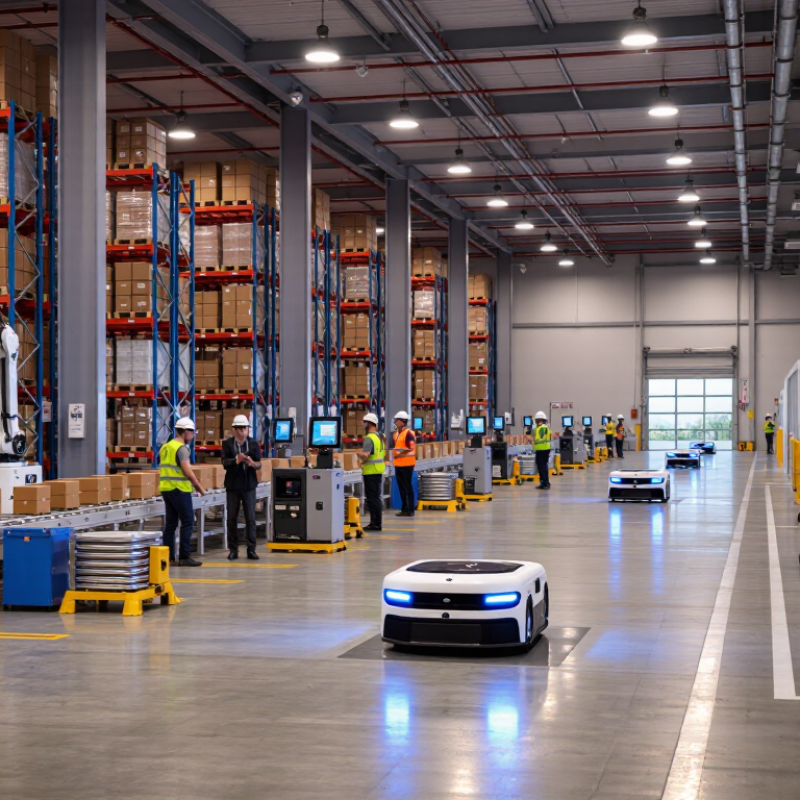
Autonomous warehouse solutions combine software, sensors, and machines to move, store, and retrieve goods with limited human direction. They connect warehouse management systems with mobile robots, automated storage units, conveyors, and robotic picking tools. The software reads orders, inventory positions, and traffic conditions. It then assigns tasks according to urgency, distance, and available equipment. That is the operating core.
Cameras, lidar, barcode readers, and safety scanners help machines understand changing spaces. A mobile robot can detect a worker, slow down, and select another route. Storage systems record each bin location, while inventory updates travel through the warehouse network. Human staff still handle exceptions, damaged cartons, unusual packaging, and quality checks. In practice, these details affect reliability. Clean data matters. So does disciplined maintenance.
Implementation usually begins with a process study, not a machine purchase. Teams measure order peaks, aisle widths, floor conditions, product weights, and handoff points. They test a limited workflow before expanding it. This reduces disruption and exposes weak assumptions. Yet autonomy is not magic. Poor labeling can cause delays, and software integration may need repeated adjustment. Charging areas are often underestimated. That weakness deserves attention. Reliable performance depends on safety training, transparent data, and clear human control when conditions change.
Global buyers should compare autonomous warehouse solutions through seven practical lenses: throughput, accuracy, integration, safety, scalability, service, and total cost. The International Federation of Robotics reported 113,000 transportation and logistics robots sold worldwide in 2023, a 24% annual increase. Growth is strong. Yet fast adoption does not guarantee operational fit.
Start with measurable performance. Request site-specific tests using real carton sizes, peak-hour orders, aisle widths, and temperature conditions. Examine pick accuracy, battery cycles, recovery time, and human intervention rates. MHI’s 2024 Annual Industry Report found that 55% of supply chain leaders planned to adopt robotics and automation within one to two years. Buyers should therefore assess integration with warehouse management systems, APIs, local networks, and existing equipment. A polished demonstration can still conceal weak interoperability.
Global evaluation also requires evidence beyond equipment. Check safety documentation, cybersecurity controls, spare-parts availability, multilingual training, and response times across time zones. Compare five-year ownership costs, including software subscriptions, maintenance, energy, and workforce training. The World Bank’s Logistics Performance Index 2023 shows large differences in logistics reliability between markets, so one deployment model cannot fit every country. I would distrust promises of “fully autonomous” operation without failure logs and customer references. That sounds cautious, perhaps overly cautious. But a stalled robot during a holiday peak exposes assumptions that a sales presentation will not.
Autonomous warehouses now extend beyond mobile robots. Interact Analysis projects the warehouse automation market will reach about $41 billion by 2027. Global buyers should compare seven practical solution categories: autonomous mobile robots, automated storage and retrieval systems, robotic picking, pallet-moving robots, automated sortation, inventory drones, and warehouse orchestration software.
Mobile robots can carry totes between shelving and workstations, reducing walking time. Automated storage systems place cartons in dense vertical locations. Robotic picking handles repetitive item movement, but irregular packaging remains difficult. Pallet robots support receiving, replenishment, and dispatch lanes. Sortation systems direct parcels into precise shipping zones. Inventory drones scan barcodes above tall racks, although lighting and aisle geometry can affect accuracy. Orchestration software connects these tools with orders, labor, safety rules, and existing warehouse systems.
The International Federation of Robotics reported 541,302 industrial robots were installed worldwide in 2023. That figure signals strong automation momentum, but it does not guarantee a quick payback. MHI’s 2024 Annual Industry Report also identifies robotics and automation as major supply-chain investment priorities. Buyers should request site-level evidence, including throughput, uptime, battery cycles, error rates, and recovery time after stoppages. Numbers matter.
A practical evaluation should include worker training and maintenance access. Some systems perform well in demonstrations but struggle with dust, mixed cartons, or sudden volume changes.
That is the uncomfortable part.
Autonomous does not mean unattended. Human oversight remains necessary for exceptions, safety checks, and continuous process improvement.
7 Best Autonomous Warehouse Solutions for Global Buyers
Autonomous warehouse solutions differ sharply in features, cost, scalability, and integration effort. Autonomous mobile robots suit flexible picking routes and can move around existing shelving. Automated storage and retrieval systems deliver dense storage, but they require stronger floor loading and precise installation. Robotic picking arms improve repetitive item handling, although irregular packaging can reduce accuracy. Pallet shuttles support high-volume storage, while autonomous forklifts handle heavier loads with fewer manual movements. Drone inventory systems offer rapid scanning across tall racks. Goods-to-person systems can shorten walking distances, but they may need major layout changes.
Purchase price alone gives an incomplete comparison. Buyers should calculate software fees, installation, training, maintenance, energy use, and downtime. A smaller mobile robot fleet may cost less initially than a fixed storage system. However, labor savings and throughput must be measured over several years. Ask for performance data from warehouses with similar products, order profiles, and climate conditions. The numbers can differ.
Integration often decides whether automation succeeds. Confirm compatibility with warehouse management, enterprise resource planning, barcode, and safety systems. Open application programming interfaces can reduce future replacement costs. Scalability matters too. A modular fleet can expand during seasonal demand, while fixed equipment may offer higher peak capacity but less flexibility. Test one operating zone before wider deployment. Forecasts are useful, not perfect. Product damage, network delays, and staff adoption can expose weaknesses that a sales demonstration hides.
Choosing an autonomous warehouse solution begins with your operation, not a product brochure. Map SKU sizes, order patterns, aisle widths, and peak-season volume. A solution handling 500 cartons daily may fail at 5,000. Review throughput, storage density, picking accuracy, and recovery time after faults. Ask for site references with similar temperatures, labor conditions, and product profiles. Real evidence is stronger than impressive demonstrations.
Tips: Request a live trial using your own cartons. Measure travel time, handoff errors, noise, and operator training hours. Check integration with warehouse software, inventory systems, scanners, and safety controls. Data matters. Also confirm local service coverage, spare-part availability, cybersecurity practices, and training responsibilities. A low purchase price can become expensive when support is distant.
Implementation should be staged. Start with one zone and a limited product group. Set clear targets for accuracy, uptime, response time, and payback. Let warehouse workers test the interface before full deployment; their practical feedback often exposes awkward steps. Plan charging areas, maintenance access, emergency procedures, and manual fallback processes. Do not assume every process should become autonomous. Some exceptions remain faster by hand. Review the first month honestly, including missed assumptions and small failures. Then adjust workflows, software rules, and staffing plans before expanding across sites.
Comparison of common autonomous warehouse solution types using a practical buyer-fit score based on scalability, integration readiness, deployment flexibility, and operational impact.
How to read this chart: Goods-to-person shuttle systems and automated storage and retrieval systems typically provide strong throughput and storage-density benefits. Autonomous mobile robots offer greater flexibility for phased deployment, while autonomous forklifts and robotic picking are best evaluated against site-specific safety, layout, and SKU requirements. Scores are comparative planning benchmarks rather than vendor claims; global buyers should validate them through a site survey, simulation, and pilot project.
Compare throughput, accuracy, integration, safety, scalability, service, and total ownership cost. Purchase price alone misleads.
Use real cartons, peak-hour orders, aisle widths, and local temperature conditions. Measure accuracy, battery cycles, recovery time, and human intervention.
Mobile robots can navigate around existing shelving and changing routes. They may require careful traffic planning. Flexibility is not effortless.
They provide dense storage and consistent movement. However, they require precise installation and stronger floor loading.
Include software fees, installation, maintenance, energy, training, and downtime. Labor savings should be measured over several years.
Automation must connect with warehouse, enterprise, barcode, network, and safety systems. A polished demonstration can hide weak interoperability.
Check safety documents, cybersecurity controls, spare parts, multilingual training, and response times across time zones. Ask for failure logs.
Not reliably. Logistics conditions differ between markets, so local networks, staffing, climate, and service capacity need review.
Trust evidence instead. Request customer references and failure records. A stalled system during a holiday peak can expose hidden assumptions.
Autonomous Warehouse solutions combine robotics, software, sensors, and data-driven control systems to automate tasks such as storage, picking, transportation, sorting, and inventory monitoring. By coordinating equipment and workflows in real time, these systems can improve accuracy, reduce repetitive labor, increase order throughput, and make better use of available space. For global buyers, evaluating a solution requires more than examining automation features; businesses should also consider total cost, operational reliability, safety, energy consumption, language and technical support, data security, and compatibility with existing warehouse management and enterprise systems.
This overview presents seven major Autonomous Warehouse solution categories, including mobile transport, automated storage, robotic picking, sorting, inventory tracking, pallet handling, and integrated orchestration platforms. It compares their typical features, investment requirements, scalability, maintenance demands, and integration complexity. The final selection should reflect order profiles, facility size, growth plans, workforce capabilities, and regional operating conditions. A phased implementation, supported by testing, employee training, performance monitoring, and flexible expansion planning, can help global buyers reduce risk and achieve sustainable long-term value.

SCP Technology