The rise of autonomous forklifts in warehousing is transforming logistics. Experts in the industry highlight their benefits daily. John Smith, a leading robotics engineer, states, “Autonomous forklifts redefine efficiency, making operations safer and faster.” This technology has revolutionized traditional warehousing methods.
With autonomous forklifts, warehouses experience enhanced productivity. These machines operate with precision, reducing the risk of human error. They work tirelessly, assisting in inventory management and order picking. Picture a bustling warehouse where autonomous forklifts seamlessly navigate between aisles, optimizing workflow. Yet, challenges remain. Implementing these systems requires training and adaptation.
The integration of autonomous forklifts also raises questions. Are employees ready for this shift? Balancing technology and human roles is crucial. The future of warehousing holds promise with autonomous forklifts leading the charge. Embracing this evolution opens pathways for growth and innovation.
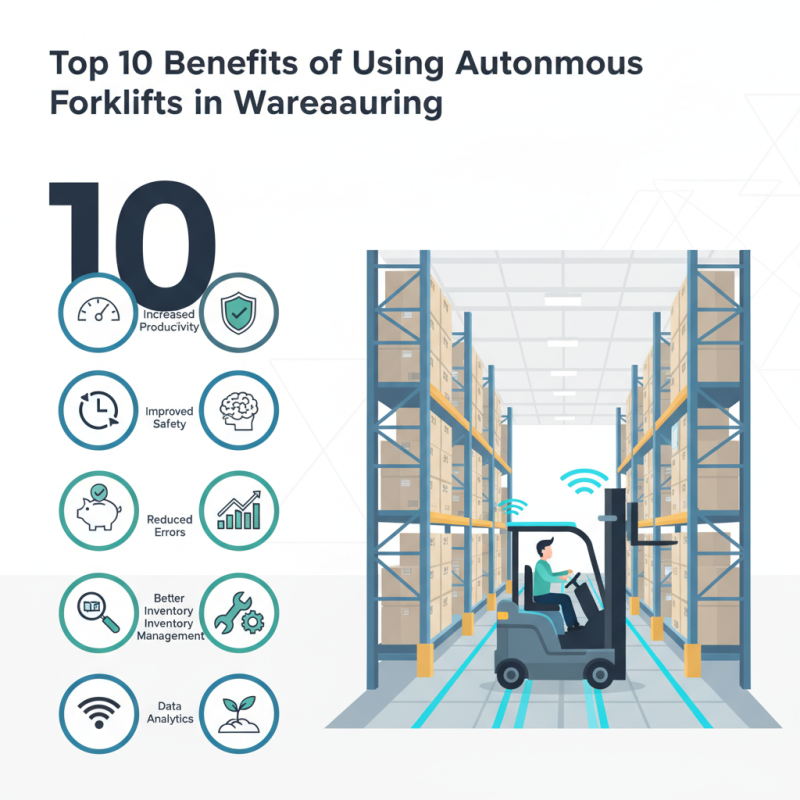
Benefits of Improved Efficiency in Warehousing Operations
Autonomous forklifts are transforming warehousing efficiency. They operate without human intervention, reducing errors and increasing productivity. According to a report by PwC, the use of automated material handling systems can boost operational efficiency by up to 30%. This is significant for businesses looking to optimize costs.
The integration of autonomous forklifts speeds up the workflow. They continuously move, transport, and stack goods, reducing downtime. In a 2022 Warehouse Efficiency Report, companies that adopted automation saw a 25% decrease in cycle times. This means products reach customers faster, enhancing satisfaction.
Tip: Evaluate your current workflow. Identify areas where autonomous forklifts can minimize bottlenecks.
Despite these advantages, challenges exist. The initial investment can be daunting. Integration into existing systems may present difficulties. Regular maintenance is necessary to ensure optimal performance.
Tip: Invest in training for your staff. Understanding the technology can mitigate resistance and facilitate a smoother transition.
Data shows that autonomous solutions in warehousing are here to stay. The potential long-term savings and efficiency gains often outweigh initial costs. However, a careful approach is vital for sustainable success.
Cost Savings and Reduced Labor Expenses with Autonomous Forklifts
The integration of autonomous forklifts in warehousing presents significant cost savings and reduced labor expenses. These machines operate independently, eliminating the need for a constant human presence. This reduction in labor costs is attractive to many businesses. With automated systems in place, companies can streamline operations while minimizing payroll expenses.
Autonomous forklifts also reduce operational risks. Fewer human operators mean a decrease in potential accidents. This safety enhancement can save companies on insurance costs and liability issues. Additionally, these forklifts can work around the clock. Increased efficiency leads to higher productivity. However, the initial investment in such technology may be substantial. Businesses must weigh these costs against long-term savings.
Moreover, the technology is not infallible. Performance can vary based on environment and maintenance. Companies need to ensure that their equipment is well-maintained. Regular check-ups can help in identifying potential issues before they become significant. While autonomous forklifts offer many advantages, thoughtful implementation is crucial to maximize their benefits.
Enhanced Safety and Reduced Risk of Accidents in Warehousing Environments
Autonomous forklifts are transforming warehousing operations. One of the key advantages is enhanced safety. Traditional forklifts often require human operators, leading to potential accidents. In busy environments, collisions can occur easily. Autonomous technology reduces this risk significantly.
These forklifts use sensors and cameras to navigate without assistance. They can detect obstacles and adjust their routes accordingly. This ability minimizes accidents that can cause injuries. In addition, their consistent operation leads to fewer errors compared to human drivers. However, there might be challenges in integrating them into existing systems. Training staff to work alongside autonomous units is essential.
Moreover, the implementation of these machines offers real-time data that enhances safety protocols. Managers can monitor movement and identify potential hazards. This data can improve operational procedures over time. In a rapidly changing work environment, flexibility is crucial. Though mistakes can happen, the overall trajectory towards improved safety is clear.
Increased Flexibility and Scalability of Warehousing Operations
In the modern warehousing landscape, flexibility and scalability have become vital. Autonomous forklifts play a crucial role in achieving these goals. With their ability to operate around the clock, they adapt to fluctuating demand levels efficiently. This flexibility allows warehouses to scale operations according to seasonal peaks or drops without extensive retraining or hiring.
Autonomous forklifts also enhance workflow efficiency. They optimize routes and adjust to real-time changes in inventory. This responsiveness minimizes idle time and maximizes throughput. A warehouse manager might notice that peak hours can be navigated better, increasing productivity by reducing congestion. However, implementing this technology comes with challenges. Staff may need time to adapt to new systems, and upfront costs can be significant.
Moreover, despite their advantages, these forklifts require regular maintenance and upgrades. Without proper oversight, reliability can be compromised. It’s essential for businesses to weigh the benefits against these hurdles. While the promise of increased efficiency is strong, the need for continuous learning and adaptation remains unyielding.
Real-Time Data Management and Inventory Control Benefits
Autonomous forklifts transform warehousing operations, especially in real-time data management. They collect and analyze data at lightning speed. This capability enables managers to track inventory with greater accuracy. Real-time updates reduce discrepancies between actual stock and recorded inventory. This is crucial as errors can lead to costly delays and missed sales opportunities.
Using autonomous forklifts allows for seamless integration of data systems. Data from multiple sources converges, providing a comprehensive view of operations. Accuracy enhances decision-making, making it easier to manage stock levels. Moreover, employees can focus on more strategic tasks rather than monotonous data entry. However, relying solely on automation has its downsides. Human oversight is still essential to address any anomalies.
Efficiency comes with a learning curve. Employees must adapt to new systems. Training is necessary to maximize the potential of autonomous technology. Misunderstandings about data interpretation may arise as well. With proper training, these challenges lessen, paving the way for improved operational effectiveness.
FAQS
: Autonomous forklifts boost efficiency by reducing errors and speeding up workflows. They enhance productivity significantly.
Businesses can see up to a 30% improvement in operational efficiency by using automated material handling systems from reports.
Yes, they can reduce labor expenses and operational risks, leading to significant long-term cost savings for companies.
Initial investment can be high, and integration into existing systems may be complicated. Maintenance is also required.
They use sensors to detect obstacles, minimizing accidents and improving overall safety during operations.
Yes, training is crucial for staff to work effectively alongside autonomous units and to ease the transition.
Regular maintenance and monitoring of equipment are vital to prevent issues and maintain optimal performance.
Yes, autonomous forklifts can work around the clock, increasing overall productivity in warehouses.
Yes, their performance can vary by environment. Regular checks are needed to address any potential problems.
They offer real-time data that helps managers identify hazards and improve safety protocols over time.
Conclusion
Autonomous forklifts are revolutionizing warehousing operations by offering a multitude of benefits that significantly enhance efficiency. By automating the handling of goods, businesses can streamline their processes, leading to improved productivity and reduced operational costs. The use of autonomous forklifts not only decreases labor expenses but also minimizes the risk of human error, contributing to a safer working environment.
Furthermore, these advanced machines provide increased flexibility and scalability, allowing warehouses to adapt quickly to changing demands. Real-time data management features enable better inventory control, ensuring that stock levels are accurately monitored and maintained. Overall, the integration of autonomous forklifts in warehousing systems represents a transformative approach that enhances both operational efficiency and safety.

 SCP Technology