The Automatic Delivery Robot is moving from pilot projects into real commercial environments. Sidewalks, campuses, hotels, hospitals, and residential communities are testing machines with insulated compartments, lidar sensors, cameras, and remote supervision. The opportunity is practical: a robot can carry groceries across a quiet campus or deliver meals along a mapped sidewalk without adding another van to the road.
Industry data supports this momentum, but the figures require careful reading. The International Federation of Robotics reported that transportation and logistics remained the leading application for professional service robots in its World Robotics 2024 report. Interact Analysis also identifies mobile robots as a growing automation segment, driven by labor shortages and e-commerce fulfillment. These reports measure wider mobile-robot markets, not only sidewalk delivery units. That distinction matters.
Ahti Heinla, co-founder of Starship Technologies, has described the company’s aim as making “local delivery more convenient, more affordable, and more sustainable.” His statement reflects the central promise of this market. Yet performance depends on weather, curb design, pedestrian density, battery range, and local operating rules. No single model fits every route. Not yet.
This guide examines seven leading Automatic Delivery Robot options for global buyers. It considers payload capacity, navigation, fleet software, charging, safety features, service support, and deployment experience. Buyers should also question vendor claims and request route-level evidence. A polished demonstration is not the same as reliable daily operation. The best choice may be less futuristic, but easier to maintain.
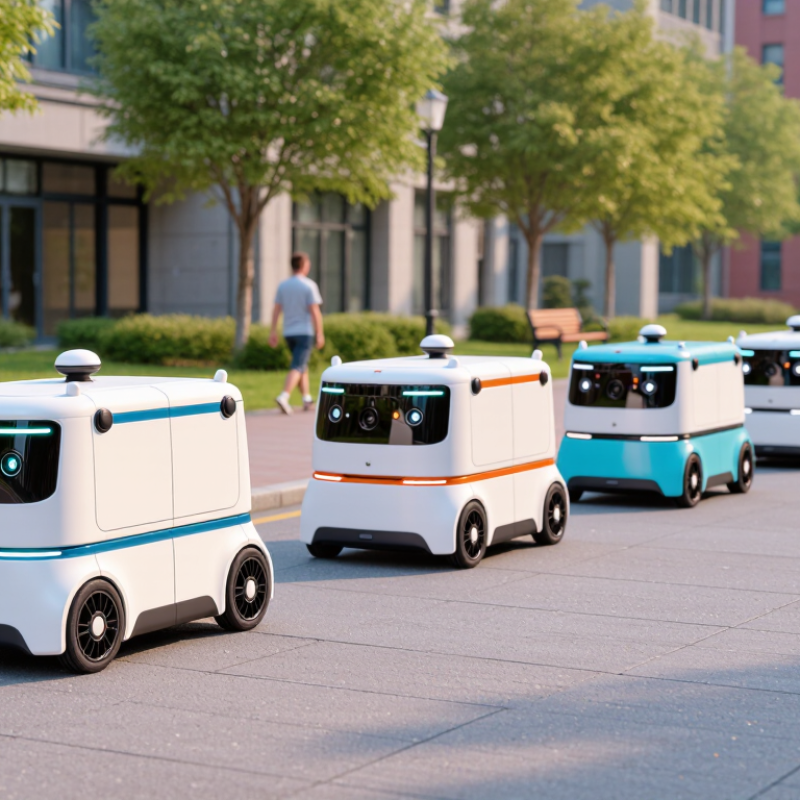
Automatic delivery robots are compact electric machines designed to move goods without a human driver. They usually operate on sidewalks, private sites, campuses, or controlled delivery zones. Their sealed compartments can carry meals, groceries, documents, or small parcels.
How do they work? Cameras, radar, ultrasonic sensors, and GPS help the robot understand its surroundings. Onboard software builds a route, detects obstacles, and adjusts speed near people or vehicles. A remote operations team may supervise unusual situations. At the destination, the recipient receives a code or digital notification and opens the compartment. The robot then returns, continues another task, or goes to a charging station. It sounds simple. It is not always smooth.
In real operations, rain, poor lighting, damaged sidewalks, and unclear addresses can reduce performance. Buyers should examine payload size, battery range, weather protection, safety controls, remote support, and local operating requirements. Human oversight still matters, especially in crowded areas. A reliable robot needs more than impressive sensors; it needs maintenance records, tested software, and a clear service process. Some delivery delays may remain unavoidable.
Tips: Test the robot on real routes before purchasing. Measure slopes, curb cuts, doorways, and delivery distances. Ask how quickly support responds when the robot stops. Also check data protection, customer verification, and emergency shutdown procedures. A small pilot can reveal problems that a showroom demonstration hides.
Comparing the seven best automatic delivery robots requires more than checking payload and purchase price. Global buyers should examine navigation accuracy, battery range, charging time, and safe operation around pedestrians. A robot carrying 20 kilograms may perform poorly on steep ramps or uneven sidewalks. Weather matters. Test the route.
Reliable robots should support obstacle detection, remote monitoring, and controlled stopping. Buyers also need clear records of safety testing, maintenance intervals, and software updates. Check whether the system follows local rules for public spaces, data protection, accessibility, and wireless equipment. Requirements can differ between cities, even within one country. A supplier’s technical documents should explain operating limits without vague promises.
Practical trials reveal weaknesses that brochures often hide. Measure delivery time at noon, during rain, and near crowded entrances. Review how staff load parcels, recover stalled units, and contact customers. A quieter motor may improve acceptance, while poor lighting can reduce camera performance. Cybersecurity deserves equal attention, including encrypted communication and restricted administrator access. I would not rank a robot highly without local service support and spare parts. Some buyers focus too heavily on autonomy. Human oversight still matters, especially during the first months.
For global buyers, the seven leading automatic delivery robots differ by route, payload, and operating environment. Sidewalk robots suit short urban trips, carrying groceries in locked compartments. Indoor robots move meals, parcels, or documents through offices, hospitals, and hotels. Campus models handle longer routes across universities, resorts, and industrial parks. Autonomous carts support warehouses, while refrigerated units protect temperature-sensitive food during local delivery. Stair-climbing designs help older buildings, but their speed is usually lower. Aerial delivery robots can reach isolated areas, yet weather and airspace restrictions require careful planning.
Reliable purchasing begins with real operating details. Check payload capacity, battery range, charging time, obstacle detection, and emergency stopping. Ask for test records from similar climates. Rain, uneven paving, snow, and crowded entrances expose weak designs quickly. A robot may work smoothly in a showroom and struggle beside a busy curb. I would not trust a single demonstration. Request maintenance schedules, software support terms, and replacement-part availability before signing an order.
Tips: Measure the route first. Record slopes, door widths, elevator access, and mobile coverage. Choose sealed compartments for outdoor use and adjustable shelves for mixed parcels. Confirm local operating permissions and pedestrian-safety procedures. Start with a limited pilot, then compare delivery time, failed trips, battery performance, and customer feedback. Human oversight still matters. That part is easy to underestimate.
Typical maximum payload capacity by delivery-robot category. Values are representative specifications reported across commercially deployed systems; actual capacity varies by configuration and local regulations.
Larger payload capacity is generally better for grocery, food-service, healthcare, and warehouse delivery applications. Buyers should also evaluate range, charging time, terrain capability, safety certification, and local operating rules.
7 Best Automatic Delivery Robots for Global Buyers?
Choosing among seven automatic delivery robots requires more than comparing payload size and battery range. In North America, buyers should check sidewalk access, remote supervision rules, curb use, and local accessibility requirements. European cities often examine pedestrian priority, privacy controls, noise, and product safety documentation. A robot that performs well on a wide campus may struggle on narrow historic streets.
Operational testing should include rain, steep ramps, uneven paving, elevator access, and evening visibility. Measure delivery time with real workers, not only factory demonstrations. Keep the payload below its advertised limit. It matters. Regional weather also changes battery performance and sensor accuracy. In hot areas, cooling procedures and shaded charging stations may be necessary. In cold regions, operators should test braking and wheel traction repeatedly.
Safety depends on both hardware and daily supervision. Buyers should verify emergency stopping, obstacle detection, low-speed behavior, warning lights, and secure compartment access. Data handling deserves equal attention, especially when cameras record public spaces. Contracts should define maintenance response times, software updates, incident reporting, and operator training. A local permit may be required before commercial deployment, even when testing seems harmless. Requirements can change between districts. That is easy to underestimate. A clean pilot can still hide poor accessibility or confusing pedestrian interactions. No checklist is perfect; field feedback must reshape the purchase decision.
Choosing the right delivery robot starts with the route, not the promotional video. A hotel may need a quiet indoor robot for meals, towels, and small parcels. A warehouse may require stronger wheels, wider shelves, and longer battery life. For outdoor campuses, check weather protection, obstacle detection, lighting performance, and safe speed limits. Seven common options include indoor service robots, hospital couriers, hotel delivery units, sidewalk robots, warehouse carriers, campus transporters, and mixed-use autonomous carts.
Measure your real workload for at least one week. Record corridor width, elevator access, floor changes, delivery distance, and peak demand. A robot that carries 30 kilograms may still fail if its shelves are difficult to clean. Ask suppliers for documented payload tests, battery replacement costs, software update policies, and local service response times. Confirm whether the robot can integrate with your ordering, access-control, and fleet-management systems.
Safety deserves more than a checklist. Look for emergency stops, low-speed operation near people, encrypted communications, and clear maintenance records. Local rules may also affect sidewalk operation, wireless equipment, and workplace safety. Begin with a small pilot area. Real sites expose awkward corners. They also reveal staff habits that specifications miss. Do not trust a perfect demonstration. My own evaluation would still leave room for doubt, especially when winter weather, crowded hallways, or weak network coverage are involved. Reliability grows through repeated testing, not confident promises.
They are compact electric machines that move meals, groceries, documents, or small parcels without a human driver. They usually travel on sidewalks, campuses, private sites, or controlled zones.
Cameras, radar, ultrasonic sensors, and GPS help it detect surroundings. Onboard software plans routes, avoids obstacles, and reduces speed near people or vehicles.
The customer receives a code or digital notification. They enter the code and open the sealed compartment. The robot then continues working or returns for charging.
Rain, poor lighting, steep ramps, broken paving, and unclear addresses can cause delays. Cold weather may reduce traction and braking performance. Problems happen.
Test real routes, not only showroom demonstrations. Measure slopes, curb cuts, doorways, elevator access, and delivery distances. Keep the payload below its advertised limit.
Buyers should check emergency stopping, obstacle detection, low-speed movement, warning lights, and secure compartment access. Remote supervision is important in crowded areas.
They are essential. Ask how quickly support responds when the robot stops. Contracts should cover maintenance times, software updates, incident reports, and operator training.
Requirements may differ between cities or districts. Check sidewalk access, pedestrian priority, privacy controls, accessibility rules, permits, and product safety documents before deployment.
Buyers should ask how cameras collect, store, and protect information from public spaces. Customer verification should be clear. Emergency shutdown procedures should also be documented.
Yes. A pilot may expose confusing pedestrian interactions, poor accessibility, or weak battery performance. The checklist is not perfect, so field feedback should change the plan.
Automatic Delivery Robot technology is transforming the way goods, meals, documents, and supplies move across commercial and public environments. These autonomous machines use sensors, mapping systems, obstacle detection, and remote monitoring to travel along planned routes, avoid hazards, and complete deliveries with limited human assistance. This article explains how Automatic Delivery Robot systems work and introduces seven leading solution types suitable for global buyers, ranging from compact indoor units to weather-resistant outdoor platforms.
It also compares important purchasing criteria, including payload capacity, travel range, navigation accuracy, charging requirements, software integration, security, maintenance, and total operating cost. Because conditions differ by region, buyers should evaluate local infrastructure, pedestrian environments, data protection expectations, safety procedures, and operational permissions before deployment. The final section provides a practical selection framework to help businesses match robot capabilities with delivery volume, location, budget, staffing needs, and long-term expansion plans.

SCP Technology